As Above, So Below

Combining essential oils is a great way to create new blends for a variety of reasons. And it seems there are as many ways to go about combining as there are unique combinations! This post is about an uncommon method called As Above, So Below. It is based on the source of the essential oil and the theory that this determines, at least in part, the benefit and uses of the essential oil.

Plant parts may determine their benefits

Medieval herbalists believed different parts of the plant serve different purposes.

  • Roots keep our energy grounded and give our work stability.
  • Wood and bark represent the middle and center, give us balance, help us grow, and provide protection.
  • Resins represent life-giving blood and vitality, and provide control and the power to heal.
  • Leaves symbolize growth and expansion and are great for enhancing meditation.
  • Flowers represent beauty, fertility, and sexuality.
  • Fruits represent completion, culmination, and abundance.
  • Seeds and nuts represent the beginnings of things and can encourage growth and change.

As Above, So Below

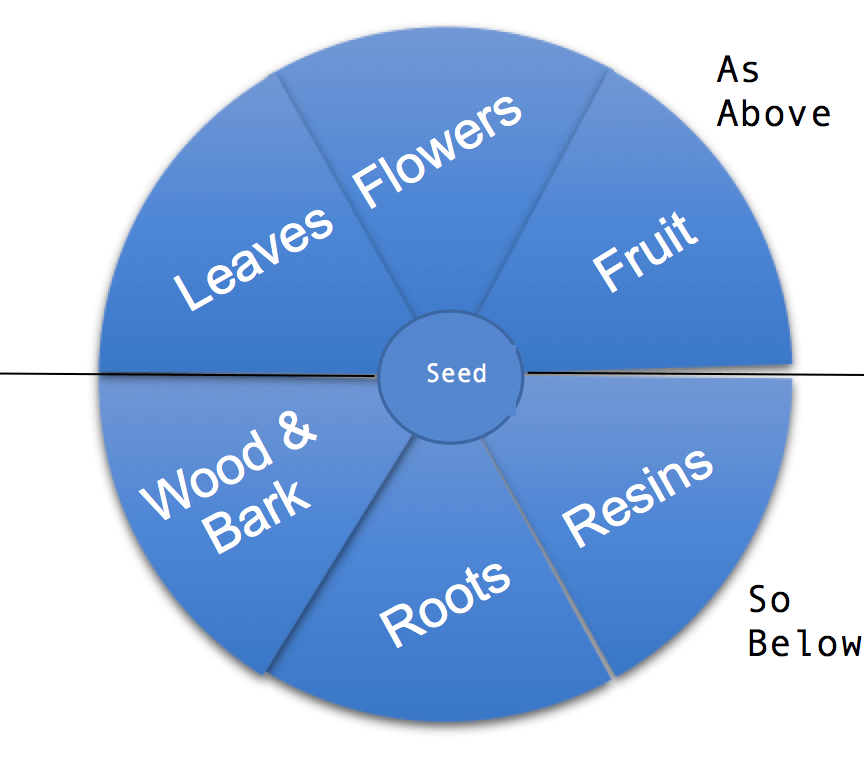
Think about the parts of the plant that are above ground vs. the parts that are underground. These categories are organized as follows:

From here, there are a few different ways to blend essential oils together. You can simply use oils of the same plant part, use oils of multiple plant parts from either the As Above or So Below group, or balance several oils from both groups.

Carrier oils fit into this method as well.

As Above Carrier Oils:

  • Avocado
  • Jojoba
  • Olive

So Below Carrier Oils:

  • Almond
  • Apricot
  • Flax
  • Grapeseed
  • Sesame
  • Sunflower

Or. . .Just Let Your Nose Decide

You don’t always have to use a method to combine oils. There are times that you may just simply combine a couple oils that you love and achieve great results. However, sometimes a bit of science or other strategy can produce balanced, harmonious blends that you will want to create again and again. Learn more about different blending types here.

Essential Oil Blending by Scent Group

Essential oils are distilled from leaves, stems and twigs; flowers and flower buds, fruit or peels; wood or bark; resins, oleoresins, or gums; roots, rhizomes, or bulbs; seeds, kernels, or nuts. And just as the source of the oil varies, so do their resulting aromas: light, mild, medium, strong, and very strong. There is actually a schematic system for blending oils based on their aromas. Let’s investigate a method of essential oil blending by scent group.

Botanical Nomenclature Simplified

Carl Linnaeus designated the nomenclature of botanicals, but the way that he described the aroma of the oil was medicinal. In the early 1900s, Hans Henning created the smell prism of six principal odors. Then in 1927, Ernest Crocker and Lloyd Henderson related odors to the four primary types of olfactory nerves. From there, aromatherapist and author Julia Lawless created the scent group circle. 

Scent Groups

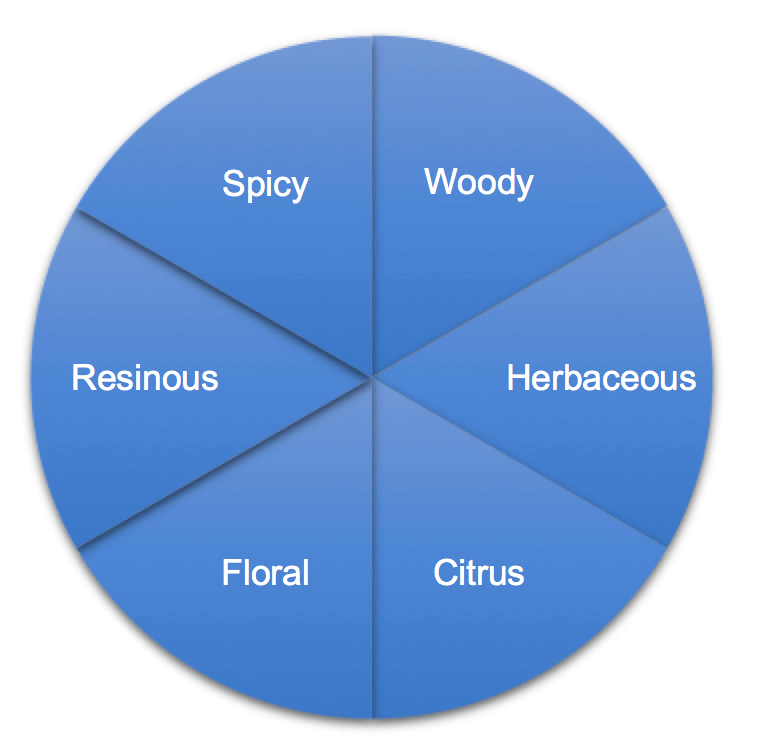
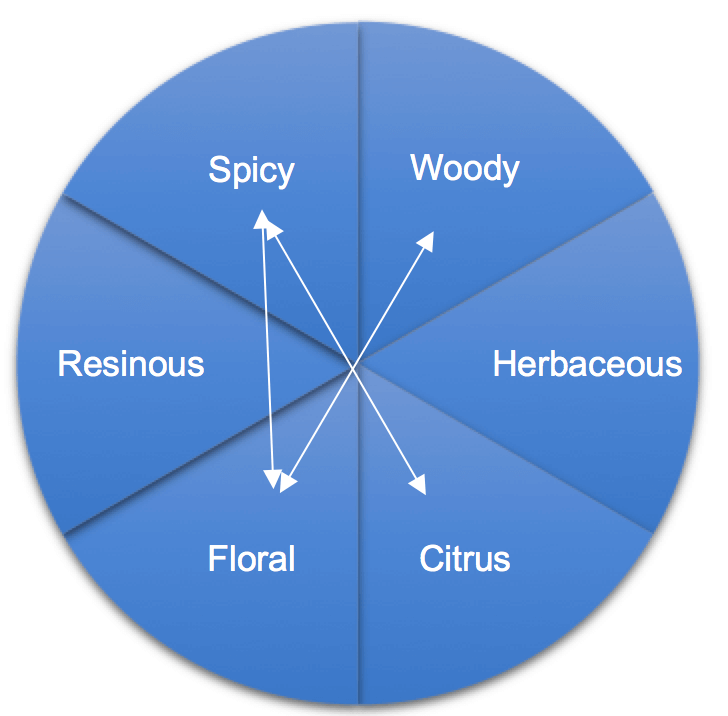
The diagram above represents a breakdown of essential oil scent groups. And below you will find example essential oils from each group.

  1. Woody: cedarwood, cypress, eucalyptus, fir, juniper, patchouli, pine, sandalwood, spikenard, spruce, valerian, vetiver
  2. Herbaceous: angelica, basil, carrot, citronella, clary sage, helichrysum, hyssop, lavender, marjoram, niaouli, oregano, peppermint, rosemary, sage, savory, spearmint, tea tree, thyme, yarrow
  3. Citrus: bergamot, grapefruit, lemon, lemon balm, lemongrass, lime, mandarin, orange
  4. Floral: chamomile, geranium, jasmine, lavender, neroli, palmarosa, rose, ylang ylang
  5. Resinous: frankincense, myrrh, onycha
  6. Spicy: caraway, cardamom, celery, cassia, cinnamon, clove, coriander, cumin, dill, elemi, fennel, ginger, myrtle

Three Ways to Blend by Scent Group

Now that we know our scent groups, let’s talk through how we can use this knowledge to strategically create great blends.

Single-Group Blending

When blending in this way, select three oils all from the same scent group. You can select more, but the aromas can get muddled if you do. Two oils usually does not give enough variety in chemical constituents to made a big impact.

Good-Neighbor Blending

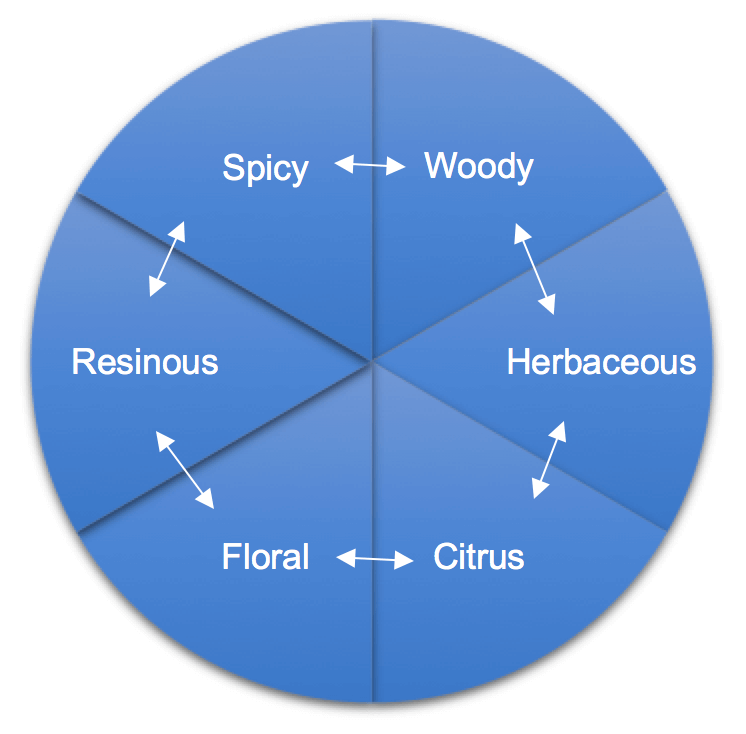
When you blend based on neighboring groups, you select three oils from two groups that are side by side with one another. This is simply a starting point, and from there you can play around with blending spicy, woody and herbaceous or floral, resinous, and spicy, etc.

Opposite Group Blending

Opposite group blending isn’t as straightforward as it sounds. Not all opposites work exceptionally well together and some groups that are opposites tend to work really well together. For example, resinous and herbaceous don’t tend to work well together even though they are opposites. Conversely, spicy and floral do work well together even though they are not opposites.

Blending with Intention

Here are a few examples:

Say you want to blend with balsam fir (woody). You can combine it with other woody oils, such as cedarwood, juniper, or cypress. Another option would be to combine it with a neighboring spicy, like tarragon; or a herbaceous, such as lavender. Lastly, you could combine it with the opposite group, floral, maybe something like geranium or jasmine.

If you want to start with a herbaceous, such as basil, you may choose others from the herbaceous group: citronella or spearmint, for example. Another option is to blend it with a neighbor: juniper (woody) or bergamot or lime (citrus). Remember that the herbaceous group combined with its opposite, resinous, doesn’t often produce the best results.

Let’s say you are starting with a citrus oil like lemon. You can easily just blend it with other citrus oils, such as lemongrass or lime. Mix it up a bit with herbaceous sage or floral rose. Or just go for the opposite group and choose something spicy, perhaps elemi or fennel.

If at First You Don’t Succeed, Blend, Blend Again

Keep in mind, these are not hard-fast rules, and all rules were made to be broken. The point is to come up with something that you like, and for you to trust your nose. Blending by scent groups gives you a place to start and will help you identify the different types of aromas of essential oils and how they can work together.

If you come up with something that you really don’t enjoy, that’s okay.  Try to add another oil to balance it out or find an alternative use for the blend. The more you play around with blends and DIYs, the better you will become at discovering what works and what doesn’t.


Want to learn more about blending essential oils? Head here.

Holiday Travel Survival Recipes

More people travel during the holidays than at any other time of year. Time away from work for family vacations, trips to visit extended family and friends, and opportunities to get away abound during this time. And as much as we look forward to time away, travel can take its toll too. From overstimulated kids to disrupted schedules, it’s not always all fun and games. Here are some of my favorite Holiday Travel Survival DIY Recipes to help you enjoy your time away.

Tantrum Tamer Roll-On

Traveling with toddlers and young children can be especially challenging. Planning ahead and making sure your little ones stay on a somewhat-regular sleep/wake schedule and ensuring they eat regular meals can help a lot. But sometimes, they just don’t cooperate. Here is a great blend to help handle those meltdown times. This Tantrum Tamer roll-on is my go-to help kids chill out when they are freaking out.

Combine the following essential oils in a 10 mL roller bottle:

  • 20 drops orange
  • 15 drops blue spruce
  • 10 drops lavender

Top off with fractionated coconut oil to fill the bottle. Attach roller fitment and invert gently to combine. Roll on as needed (which hopefully isn’t often!)

Acceptance Perfume

Adults may need a little extra help on plane or car trips too. This Acceptance Perfume may be just what you need to help you take a deep breath and settle down for a long trip.

Calm and Collected Essential Oil Roll On

Some parts of the holidays can be stressful. If you find yourself in difficult family situations or dealing with back to back events, this Calm and Collected Roll-On recipe can help you chillax and enjoy the festivities. It contains essential oils that can help protect you from the barrage of energies you may encounter at holiday gatherings too.

CBD Sleep Balm

Part of surviving holiday travels includes getting plenty of rest. CBD to the rescue! If you or other family members sometimes struggle to fall asleep in unfamiliar places or just need a little extra help winding down, keep this balm handy. Slather on a bit at bedtime for a restful night that will have you ready to face the next day.

DIY Immune Booster

No one wants to be sick over the holidays. But odd schedules, climate change, less-than-desirable eating habits, and more can put your immune system in overdrive. Your holiday travel survival kit better include something to give it an extra boost. Use nightly as a preventive, or if you prefer, just keep it handy to use at the first sign of sickness.

  • 5 drops clove
  • 5 drops tea tree
  • 3 drops lemon
  • 3 drops oregano
  • 2 drops frankincense
  • Pyrite stones

Combine all în a 10 mL roll on and fill up with carrier oil.

Travel Roll-On Recipes

This collection includes some of my favorite travel necessities. There’s a recipe for digestion, mood, immune system, sleep, and stress. Mix these babies up ahead of time and you will be prepared for whatever challenges you face during your holiday travels!


Make sure you are adequately outfitted for any trip you have coming up with my favorite 10 Travel Essentials!

Energizing DIYs

The end of the year is in sight, and many of us look forward to a bit of a break and some much-needed rest during the holiday season. Wintertime seems to beg us to slow down as we take inventory of the year behind us and set our sights to the one ahead. Sometimes I find it challenging to get back into the swing of things after a rest. For this, I give you these energizing DIY recipes. Load up your diffuser and get ready to scrub away the lazies.

Energizing DIY Recipes

Who Needs Coffee? Diffuser Blend

Fill your diffuser with water and add the following essential oils for an aroma that will wake you up even better than that daily dose of caffeine.

7 drops Eucalyptus globulus
5 drops rosemary
5 drops grapefruit
2 drops peppermint

Wake Up Sugar Scrub

If you wake up feeling sluggish or have trouble getting out of bed, try this invigorating sugar scrub. The bright, uplifting scents of peppermint and lemon are here to help wake you up.

This scrub not only has the power of lemon essential oil, but also lemon zest and lemon juice. Lemon juice brings a big dose of vitamin C and citric acid, which can brighten skin over time. Vitamin C also contributes antioxidants that can reduce free radicals, boost collagen production, reduce the appearance of dark spots, and even fix a spray tan gone wrong.

The sugar and lemon juice and zest gently slough off dry skin, the coconut oil moisturizes, and lemon and peppermint provide a mood boost.

Use caution if you’re using this scrub on your face or areas that will be exposed to the sun. Both lemon essential oil and lemon juice increase the risk of sunburn.

Ingredients

1 1/4 cups sugar

1/2 cup coconut oil

1 tablespoon lemon juice

Zest from 1/2 lemon

5 drops peppermint essential oil

5 drops lemon essential oil

Instructions

Combine all ingredients in a small bowl, and mix until thoroughly combined.

This energizing DIY recipe makes a great gift too!

This recipe filled three 4 oz. mason jars – which is absolutely PERFECT for gift giving!


Looking for more of a boost? Check out these 10 Essential Oils for Motivation.