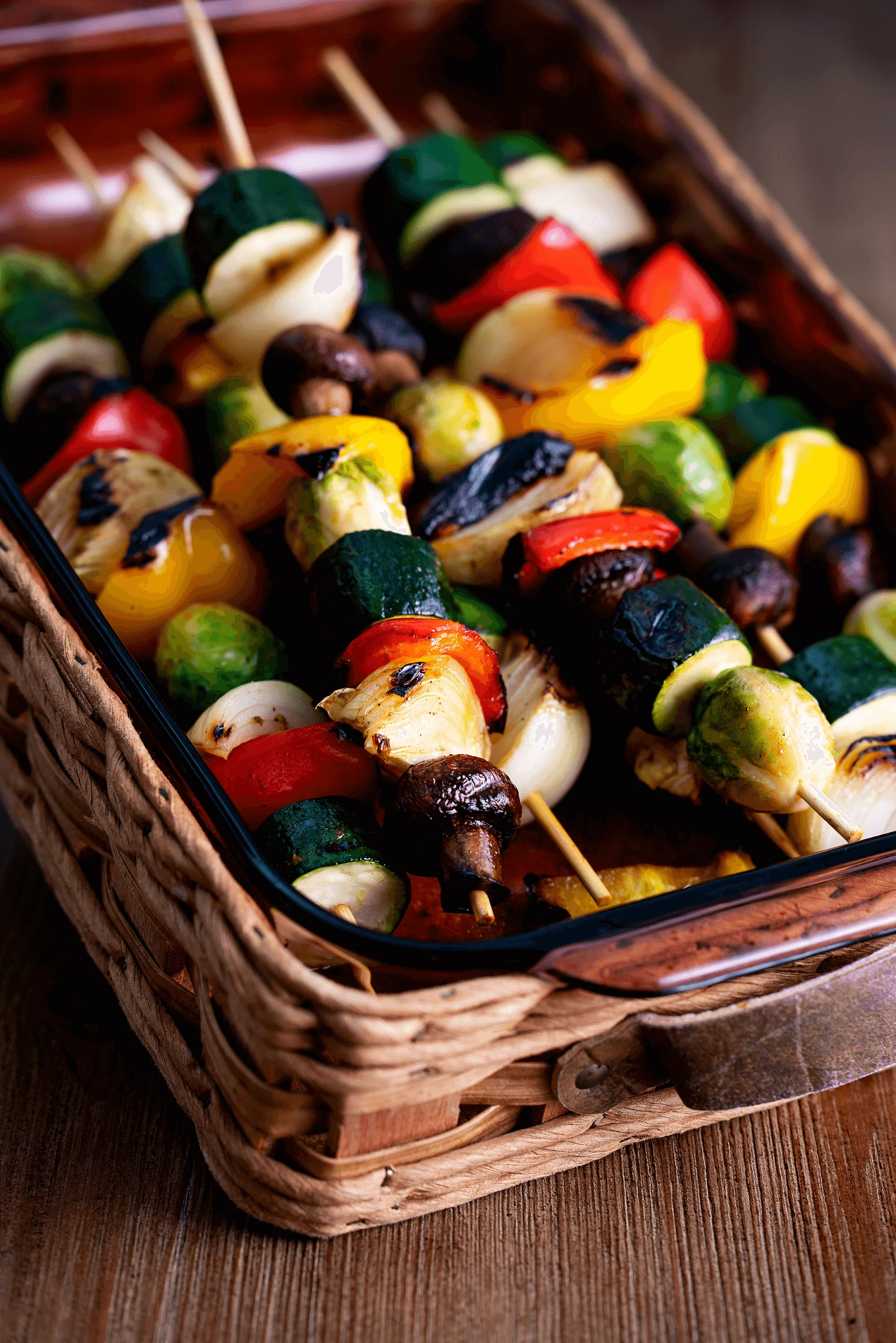
I like to mix and match vegetables for their diverse flavors, textures, and health benefits. Meat lovers will be surprised at how filling and delicious roasted vegetables can be. So fire up the grill and get ready for some Mediterranean Vegetable Kebabs!
The History of the Shish Kebab
A shish kebab typically consists of meat and vegetables grilled on a skewer. The term shish kebab comes from the Turkish words şiş kebap that mean “skewer” and “roast meat,” which originated when Turkish soldiers used to grill chunks of freshly hunted animals on swords over open field fires. Thankfully, we’ve come a long way since then.
Today, shish kebabs many cultures enjoy kebabs in some form or another:
In Asia, there’s satay, which is roasted skewered meat served with a dipping sauce often made from peanuts.
Portuguese espetadas consist of beef marinated in wine and slow-roasted on skewers over an open fire.
In Japanese cuisine, you’ll find yakitori, or grilled skewered fowl.
The French call shish kebabs brochettes, meaning “skewers”.
There are No Rules
Although shish kebabs traditionally refer to meat on skewers, there’s no rule that states you have to have meat. Serve up a collection of vegetables for a flavorful, healthy meal. These Mediterranean Vegetable Kebabs don’t have to be exclusively vegetables either! You can be creative here and even include fruits like peaches, nectarines, pears, pineapple, or cherries. You simply can’t go wrong with a variety of fresh produce.
Make it a Meal
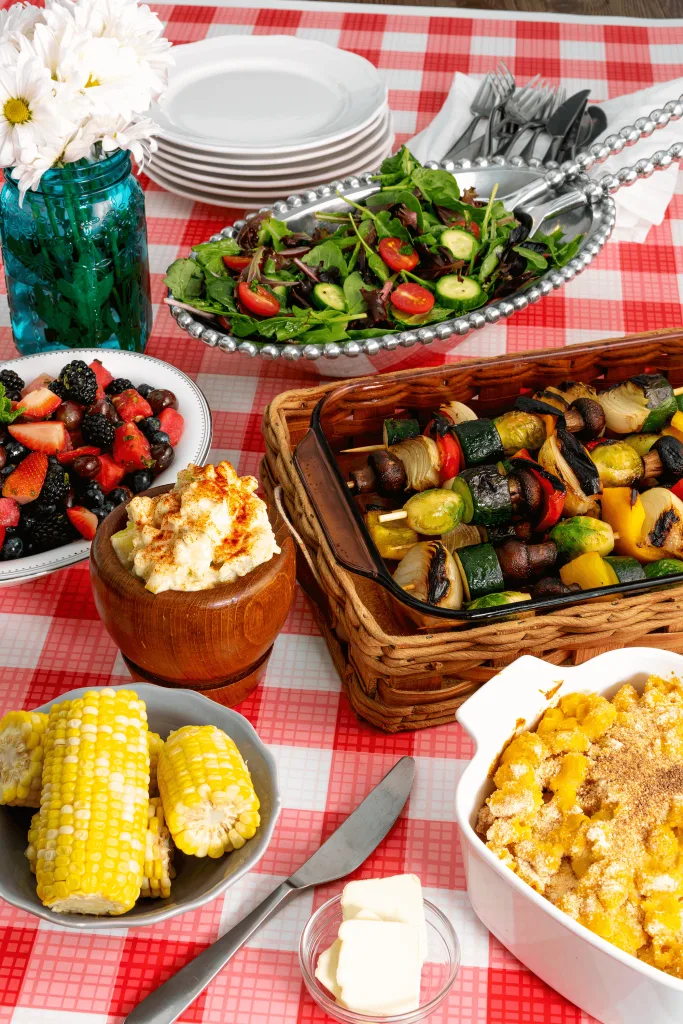
Serve with delicious Vegan Mac and Cheese Muffins and a tossed garden salad for a crowd-pleasing barbecue picnic!
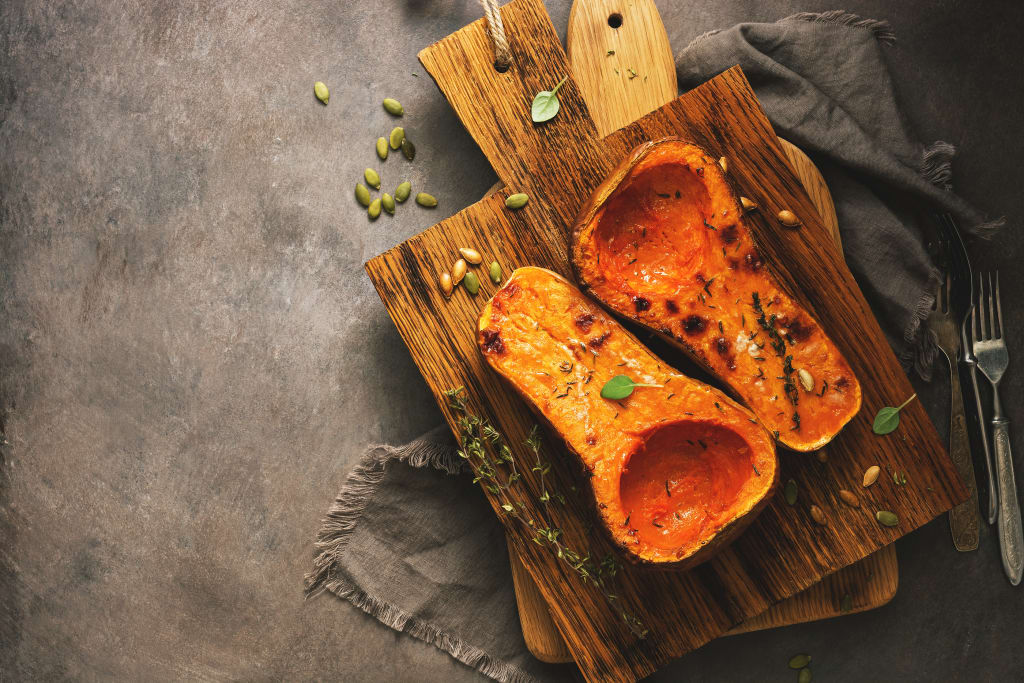
This butternut squash soup is a delicious fruit soup. While typically thought of as a vegetable, butternut squash is a fruit. This is one of the reasons the flavors work so well with flavors like cinnamon, nutmeg, allspice.
For this recipe, we use a luxurious cashew cream to add creaminess and fatty flavor to plant-based recipes. Cashew cream is an excellent substitute for everything from cream cheese to thickeners for custards and soups to pastry cream.
Why Butternut Squash?
Butternut squash is extremely versatile. In addition to this soup, consider these uses of butternut squash:
Cut the squash into cubes and roast in the oven with olive oil, salt and pepper
Move over sweet potatoes, butternut squash are the newest fries on the block.
Top salads with roasted butternut squash to add a boost of fiber and vitamin A.
Make a savory alfredo sauce with butternut squash puree and nutritional yeast.
Toss chunks of butternut squash into stews and chili.
Use butternut squash instead of potatoes in curries
Is it good for me?
Butternut squash is very high in Vitamin A and contains the carotenoids beta-carotene, beta-cryptoxanthin, and alpha-carotene which gives the distinct color to the fruit. These compounds can then get converted into retinoic acid and may help to support eye health.
Vitamin A is also critical for the regulating cellular growth, bone health and immune function.
Butternut squash is also rich in vitamin C — a nutrient critical for immune function, collagen synthesis, wound healing, and tissue repair.
Both vitamins A and C work as potent antioxidants in your body. This protects cells from damage caused by free radicals.
Make it A Meal
Let this Butternut Squash Soup be the start of a fall holiday meal, and put this Shepherd’s Pie with Gravy on the main stage after the appetizers.
Years ago, I created this vegan soup recipe. It was one of those times I didn’t know what to cook, so I started pulling things out of my fridge and pantry. An hour later, this unique, now-favorite Leek, Fennel, Apple and Walnut Soup recipe was born.
For me, the easiest of all foods to make is soup. If I could cook nothing else for the rest of my life, it would be soups. I love the slowness of the whole process; from making stock, to slicing vegetables, to toasting nuts, to adjusting seasonings. . . it all just makes me happy.
More than anything else, cooking soup is a master for every person with a love-hate relationship with leftovers. I forage through the fridge and find ways to make soups out of whatever I happen to find among the week’s leftovers. I can magically make dinner out of the strangest bits in the fridge.
The Secret to Making Great Soups from Scratch
It’s almost dinner time, and you don’t know what to cook. You want to serve your family a warm, filling, wholesome meal, but you’re fresh out of ideas and low on ingredients in the pantry. Soup to the rescue! If you have just a few staple ingredients on hand, you can create a one-of-a-kind soup creation.
Once you know the basic steps of creating a flavorful, wholesome soup, you can experiment with different vegetables and seasonings for endless possibilities.
Let’s get started
Many great soups start with sautéed onions (or in this case, leeks). Add enough fat to a heavy-bottomed pot to completely coat the onions thoroughly, and sauté them slowly over medium-low heat. Don’t skimp on the oil as it can make or break the final flavor of your creation. Cook the onions until they are translucent and soft, but not crispy.
Add your veggies
Next, add your other vegetables or fruits, such as carrots, celery, and in this case, apples and fennel. Be sure your produce is cut uniformly, otherwise you will end up with under- or over-cooked bits in your soup. Salt the vegetables generously. This is a vital technique, and not just for soup: build and develop flavor at each step before moving on.
Time for the stock
After vegetables have simmered for a few minutes, the next step is adding the broth or water. Bring the soup to a boil, and reduce to a simmer. Cook until your vegetables are tender but not falling apart. While it’s good to taste along the way, refrain from over-seasoning until the vegetables are nearly done, as they impart so much flavor to the broth as they cook. When everything is tender, adjust your seasonings.
There you have it!
This basic formula is a great starter for so many different kinds of soups. You can use a variety of vegetables and seasonings to create lots of different options. If you’re making a blended soup, like this one, carefully use an immersion blender to blend until smooth, and finish with your favorite garnishes.
Leek, Fennel, Apple and Walnut Soup
Sweetness from the apple and maple syrup, richness from the walnuts, bitterness from the fennel, pungency from the turmeric and leeks. . .this soup has a very unique flavor profile.
If you have never cooked with leeks, you may be surprised at the flavor. Though they are in the onion family, they have a much more subtle and refined flavor. They also cook a bit gentler.
Fennel is a flowering member of the carrot family and has a strong anise flavor and aroma. Every bit of the plant, from the seeds, to the bulb and the fronds, can be eaten, and each has a slightly different flavor.
Turmeric is widely touted for its health benefits and is in the ginger family. It has a very strong yellow-orange color that can easily get transferred to your hands and towels while cooking.
All in all this vegan soup is a quick and easy dish that can be a warming midweek favorite.
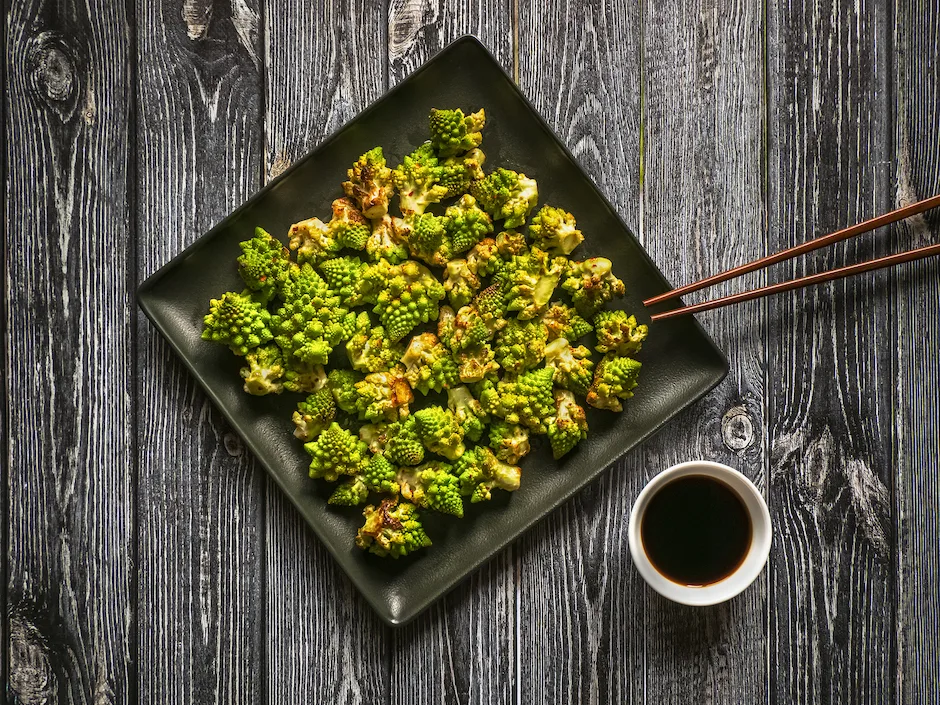
This is such a simple dish, but it is meaningful because many people have yet to try this vegetable. Until I tried this recipe, I had never eaten Romanesco broccoli. This beauty is a Fibonacci-esque flower, is more crunchy than cooked cauliflower, and milder in flavor than broccoli. I hope you enjoy.
Remember, eating is a journey and an adventure. Adding new vegetables in the mix can enliven a diet that has become monotonous. This is just one example of adding an interesting vegetable to my repertoire.
Clearing the Confusion About Cruciferous Vegetables
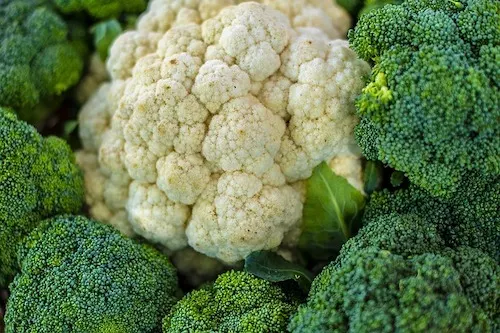
Although broccoli, cauliflower, and Romanesco are all part of the same family of vegetables, these produce items have subtle differences. Despite the fact that they all belong to the family Brassicaceae, these leafy greens vary in taste, texture, and proper preparation methods. So next time you head to the produce aisle for a healthy fix, you can select the ideal vegetable to suit your recipe.
Romanesco
Depending on the source, you may see Romanesco listed as cauliflower or broccoli. It’s light green color falls somewhere in between the two, but what truly sets it apart is it’s unmistakable texture. It’s spiky yet symmetrical Christmas tree appearance looks like an exotic flower and offers a super textural, crunchy experience. With an earthy flavor similar to broccoli, Romanesco is great raw on a crudité platter or salad, steamed, or even roasted.
Broccoli & Cauliflower
While some people think that cauliflower is nothing more than white broccoli, they are actually two entirely different vegetables. They have similar health benefits, including a high fiber content, vitamin C, folate, and beneficial phytochemicals. Broccoli also contains vitamin A, while cauliflower does not.
Cauliflower has a firmer texture than broccoli because of its tighter-packed florets. Broccolini is a hybrid of broccoli with long, tender stalks and florets.
The two can be prepared in a variety of ways. Enjoy them raw, steamed, grilled, baked in casseroles, or roasted. Cauliflower can also be steamed or boiled and mashed for a low-calorie mashed potato substitute, such as this Roasted Garlic Cauliflower Mash recipe. The key when cooking broccoli and cauliflower is to cook just until tender. No one likes overcooked broccoli mush.
Make it a Meal
Pair this Roasted Romanesco Broccoli with Sun-dried Tomato Linguine for a wholesome, delicious meal!
We use cookies on our website to give you the most relevant experience by remembering your preferences and repeat visits. By clicking “Accept”, you consent to the use of ALL the cookies.
This website uses cookies to improve your navigation experience. Certain cookies categorized as necessary are stored on your browser as they are essential for the working of basic functionalities of the website. We also use third-party cookies that help us analyze and understand how you use this website. These cookies will be stored in your browser only with your consent. You also have the option to opt-out of these cookies. But opting out of some of these cookies may have an effect on your browsing experience.
Necessary cookies are absolutely essential for the website to function properly. This category only includes cookies that ensure basic functionalities and security features of the website. These cookies do not store any personal information.
Any cookies that may not be particularly necessary for the website to function and are used specifically to collect user personal data via analytics, ads, other embedded contents are termed as non-necessary cookies. It is mandatory to procure user consent prior to running these cookies on your website.
Gut Health Impacts Your Overall Health In So Many Ways.
If you experience any of these conditions, it may be time for you to take a closer look at the health of your gut and microbiome:
Acne
Anxiety
Autoimmune Conditions
Brain Fog
Fatigue
Joint & Muscle Pain
Chronic Headaches & Migraines
This handout breaks down the 5 R's of Healing Leaky Gut to walk you through 5 steps to getting your gut health under control to experience better overall health.

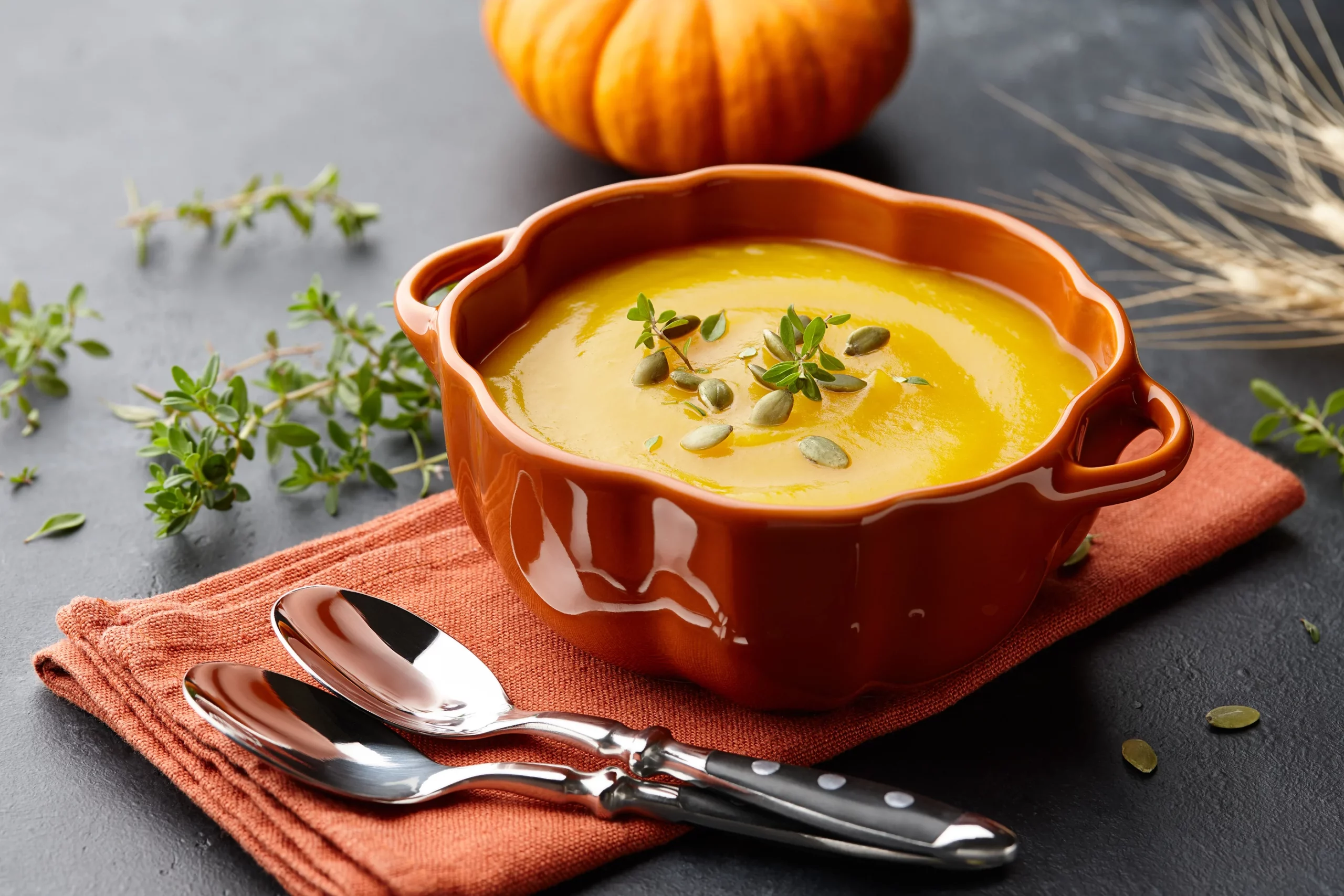



 Sweetness from the apple and maple syrup, richness from the walnuts, bitterness from the fennel, pungency from the turmeric and leeks. . .this soup has a very unique flavor profile.