Frankincense Essential Oil

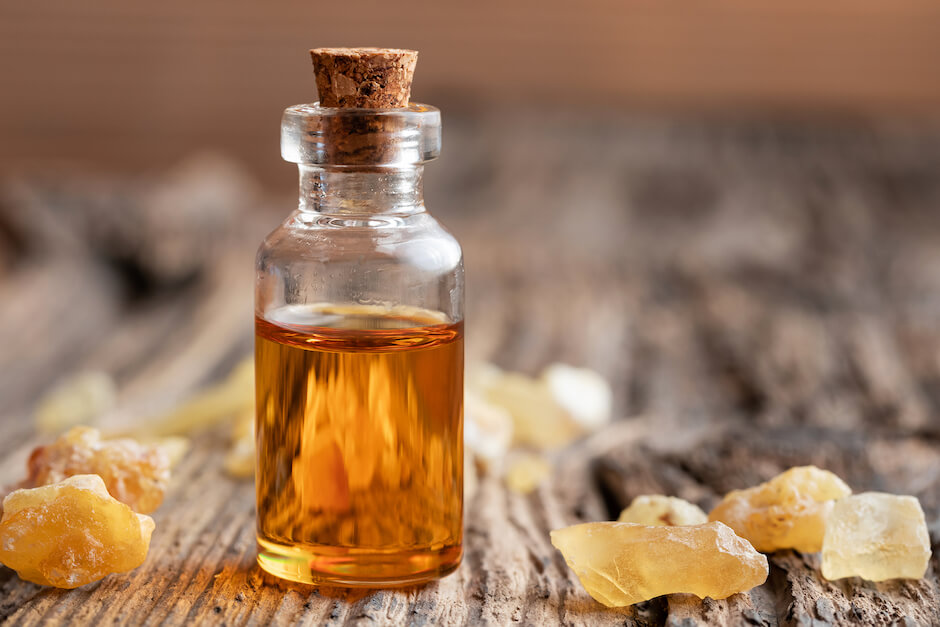
One of the most famous essential oils, frankincense is an aromatic resin from the Burseraceae family. Frankincense has a long history of trade across the Arabian Peninsula for use in religious ceremony as well as topical and aromatic uses. Not only that, but it is a common ingredient in hundreds of essential oil blends as well as personal care products. A look at the constituents in the different frankincense varieties will help you select the proper species.

Aroma

In general, almost all Boswellia essential oils have a resinous aroma. It has a scent strength of three, and functions as a base note in perfumes. Because of the gentle aroma and therapeutic benefits, the essential oils are common in perfumery, aromatherapy, and skin care. 

Constituents in Frankincense Resin

Incensole acetate

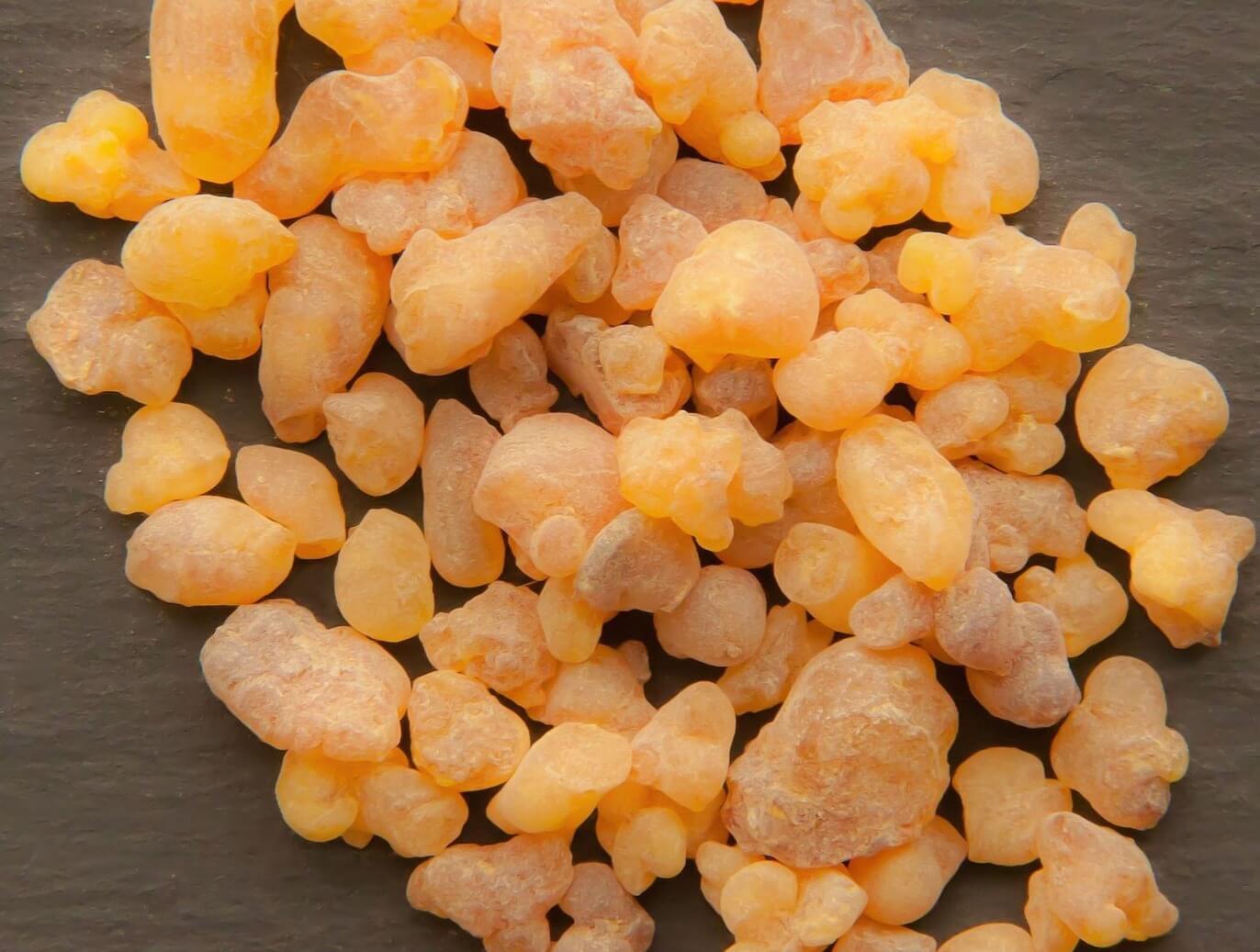
Frankincense resin contains a small amount of incensole acetate, which is a diterpene alcohol that activates the TRPV3 mRNA. This creates a soothing, warming sensation on the skin and helps elevate and relax the mood. Perhaps this is why people have burned frankincense resin in spiritual and cultural practices for centuries. Incensole acetate does not survive the distillation process. Therefore, it is not found in frankincense essential oil.
Triterpenoid boswellic acids

Boswellic acids are also present in resins. Because the acid is water soluble, it is not found within essential oils, though it may be found in some extracts. α-boswellic acid, β-boswellic acid, and 11-keto-β-boswellic acid have general protective effects throughout the body.

Constituents in Frankincense Essential Oil Varieties

There are seven species of frankincense, each with a unique chemical composition.

Latin NameChemical Composition 
Boswellia carteriiα-Pinene 28-49%, α-Thujene 10-22%, Limonene
Boswellia frereanaα-Pinene 42-80%, Sabinene 0.5-21%
Boswellia neglectaα-Thujene 19%, α-Pinene 17%, Terpinen-4-ol 13%
Boswellia papyriferaOctyl acetate 50-60%, 1-Octanol 3.5-12.7%
Boswellia rivaeLimonene 28%, ?-Carene 16%, α-Pinene 13%
Boswellia sacraα-Pinene 10-51%, α-Phellandrene 0-42%
Boswellia serrataα-Thujene 26-47%, α-Pinene 0-11%

α-Pinene: Excellent on skin, especially outdoors; focuses and concentrates the mind; antioxidant; opens airways.

α-Phellandrene: May reduce inflammation

α-Thujene: Excellent on skin; may reduce inflammation; soothes digestion. 

?-Carene: Excellent on skin

Limonene: Energizing; soothes digestive system; calms the mind

1-Octanol: Used in many perfumes

Octyl acetate: Used in many perfumes

Sabinene: Gentle on wounded skin; antioxidant; may reduce inflammation. 

Terpinen-4-ol: Excellent on skin and may reduce topical inflammation.

Now to Choose

As you can see, the chemical makeup of each frankincense species lends a distinct set of properties and uses to the essential oils. The most common species found as essential oils are B. carterii, B. sacra, and B. frereana. The growth of each species tends to be region specific, with B. carterii growing in Somalia and Yemen and B. frereana growing in Somalia, while B. sacra is only grown in Oman.

If you are looking for the most inexpensive option, B. carterii is the one to choose. This essential oil can be used for various purposes and may even help to accentuate the potency of other essential oils. B. sacra is a slightly more powerful anti-inflammatory. Finally, many people love the brighter, lemony aroma of B. frereana and use it for its emotionally supportive properties.

Looking for a DIY with frankincense essential oil?

Come check out this Liquid Courage Roll-On or my favorite Skin Nourishing Ointment!


Do you love learning the science of essential oils? Then come , your one-stop location for essential oil and natural health and wellness education!


8 Tips to Avoid Motion Sickness while Traveling

Motion sickness can be the bane of many a traveler, and it can threaten to ruin your vacation or journey. The good news is that the causes of motion sickness are well known, symptoms are preventable, and there are many simple solutions to help.

What is Motion Sickness?

Motion sickness is caused when the inner ear, the visual field, and other perception systems are in conflict. The eyes see one thing, but the inner ear senses a different balance. Common symptoms include nausea, stomach upset, or heartburn. More severe symptoms may occur, including flushing, vomiting or retching.

Preventing Motion Sickneess

The first line of defense to prevent motion sickness are behavioral interventions that target the inner ear, the visual field and other perception.

1. Stabilize the Inner Ear

Creating stability in the inner ear is critical for preventing motion sickness in the first place. Depending on how you’re traveling you may:

  • Sit over the wing on planes.
  • Sit in the front seat of cars, near the front of the bus, on the lowest level of a train.
  • Always face forward on all types of locomotives.
  • Avoid driving over terrain with turns, accelerations and ups and down.
  • Avoid boat travel through rain and storms.

2. Slowly Synchronize with Motion

When you know you are headed on a cruise or car journey, start in calm conditions and train your body to actively turn your head into turns. In planes, boats, and trains, walk around as often as possible, stand with legs bent, and learn to let your body anticipate and move with common motions.

3. Synchronize the Visual Field

To bring the eyes and inner ear into balance, let’s focus on seeing the one continuous visual field.

  • On cruise ships and in cars, always visualize the true horizon and focus on a point on the distant horizon.
  • Avoid close work, such as looking at screens, computers or reading.
  • When possible, avoid driving through fog, clouds, or snow that might block view.
  • If you can’t see the horizon, keep eyes closed or wear sunglasses.

4. Reduce Behaviors that Increase the Risk of Motion Sickness

Many of the choices that we make while traveling increase the risk of motion sickness. Here’s a few tips to help you travel nausea-free:

  • Avoid alcohol, rich fatty foods, dehydration, hunger, and start your travels on an empty stomach.
  • Attempt to sleep as often as possible, and avoid fatigue.
  • Ensure good ventilation, and avoid noxious stimuli, such as exhaust or unpleasant bathroom aromas.
  • Avoid reading or scrolling through your phone or computer while in motion.

5. Stay Positive to Keep Motion Sickness at Bay

Motion sickness has an emotional component to it. If you think you are going to be sick, or if you constantly dwell on the concern of getting sick, you are at a higher risk for actually getting motion sickness.

Be sure to keep your thoughts positive, listen to upbeat music, and avoid talking about motion sickness.

6. Medicines May Help

If you are highly prone to motion sickness then you may want to use a medicine to prevent nausea and vomiting. Transdermal scopolamine patches can be placed behind the ear to prevent motion sickness.

This medicine works by blocking the action of acetylcholine and reduces symptoms of nausea and vomiting. This medicine should not be used by people with open angle glaucoma or psychotic disorders; it can worsen glaucoma, and has the side effects of disorientation, dry mouth, vision changes, confusion and agitation.

Over the counter antihistamines, such as dimenhydrinate (Dramamine)and diphenhydramine (Benadryl), may also be used, but unfortunately these can make you very sleepy.

7. Try a Natural Remedy

Because of the side effects of over the counter and prescription medicines, many people choose to look for more natural approaches.

Peppermint tea is commonly used to treat motion sickness, but data is conflicting with some research concluding that it works, and other studies concluding there is no effect.

Ginger has the best evidence for reducing motion sickness, so grab a ginger tea or bring ginger capsules with you as you travel.

8. Do Acupressure Massage on Your Forearm

Stimulation of acupuncture point P6 in the center of the inside forearm has been shown to increase tolerance to motion in small trials. To do the acupressure on yourself, you simply:

  1. Position your hand so your fingers are pointing up and your palm is facing you.
  2. To find pressure point P-6, place your thumb on the inside of your wrist just below your index finger. You should be able to feel two large tendons (tissue that connects muscles to bones) under your thumb. ​This is pressure point P-6.
  3. Use your thumb or forefinger to massage on this point in a circular motion for 2 to 3 minutes. Be firm, but don’t press so hard that it hurts.
  4. Repeat the process on your other wrist.

Wondering what all you should bring on vacation? Check out this blog on my favorite travel gear.

10 Ways to Use Spruce Essential Oil

Spruce essential oils offer the woody, crisp aroma of evergreen trees, making these oils wonderful for diffusing and many topical applications. Whether you prefer blue spruce or black spruce, the chemical constituents in these evergreen tree oils give them a variety of therapeutic benefits. Read on to learn the differences between blue and black spruce and 10 ways to use spruce essential oil.

Blue Spruce

Blue spruce comes from the Picea pungens tree, also known as the Colorado Spruce. This popular landscaping tree can reach up to 60 feet in height and ranges from green to blue to silver in color. The aroma of blue spruce essential oil is sharp and woody, often appealing to men.

Black Spruce

Black spruce comes from the Picea mariana tree. It is a tall, narrow evergreen tree that grows primarily in Canada, Alaska, and some northern U.S. states. The needles are typically green with a hint of blue. Black spruce essential oil has a milder, slightly sweeter aroma than blue spruce, but it is still very balsamic.

Northern Lights black spruce comes from British Columbia, Canada. It is said to carry the electrical frequency imparted by the aurora borealis that occur regularly over the farm.

Ways to Use Spruce Essential Oil

Grounding

Historically, spruce essential oil was used by Native Americans for cleansing and purifying rituals. As with most deep-rooting trees, spruce oil is very grounding and balancing to the root chakra. Place two drops of oil in the palm of your hand, rub hands together, and cup them over your nose and mouth. Take several deep breaths and enjoy the aroma. Do this as often as necessary to promote grounding and centeredness, as well as a sense of security.

Wake Up Your Commute

The fresh scent of spruce is invigorating and energizing to the mind and body. Try using it in car diffuser or wearing topically to promote alertness during a long drive or an early morning commute.

Release Emotional Blockages

Spruce oil is a favorite to use during meditation. It helps develop intuition and connectedness and is instrumental in releasing stagnant emotions. It also aids in finding inspiration, deepening spirituality, and strengthening trust.

Set the Mood

Men typically love the earthy, heady aroma of spruce. Try out this In the Mood Essential Oil Roll-On with black or blue spruce.

Improve Sleep

Alpha pinene has been shown to increase non-rapid eye movement sleep. A couple drops of spruce on the bottom of the feet at bedtime can result in falling asleep faster and a more restful night’s sleep. Or try this Peaceful Rest diffuser blend:

  • 5 drops spruce essential oil (either black or blue)
  • 4 drops cedarwood
  • 3 drops frankincense

Boost the Immune System

Spruce essential oils contain abundant monoterpenes, which are powerful antioxidants. Use this oil regularly in the diffuser or topically to support your immune system.

Calm Yo’Self

Although spruce is invigorating, it has properties to combat feelings of stress as well. In one study, limonene administered to mice greatly decreased their anxiety response to a maze test. Use this blend to help temper your response to stressful situations: 5 drops Northern lights black spruce, 5 drops vanilla, 2 drops orange.

Open the Heart Chakra

Spruce not only supports the root chakra, but the fresh pine-forest aroma opens the heart chakra as well. The heart chakra also governs the lungs, so opening this chakra can improve respiration.

Beard Serum

Spruce essential oil is conditioning for hair and can soften and smooth coarse hair. Men love using spruce in this DIY Smoothing Beard Serum recipe.

Body Boost

The energizing benefits of spruce will do a body good. This blend is also great for an invigorating after workout massage.

  • 1 oz. jojoba oil
  • 8 drops Northern lights black spruce essential oil
  • 3 drops balsam fir essential oil
  • 3 drops laurus nobilis

Combine ingredients in a small glass jar. Apply liberally to muscles and joints as desired.

Have another favorite way to use spruce essential oil? Comment and share!

Love top ten lists? Check out my 10 Ways to Use Cedarwood Essential Oil!


If you are looking for even more essential oil education, come , your Essential Oil Encyclopedia!

Mosquitoes: What you need to know to protect yourself

Most people agree that the most annoying insects are mosquitoes. Many a summer picnic, hike, or enjoyable afternoon outside has been spoiled by these pesky buzzing parasites. And they are not just annoying. Because they transmit various diseases, the World Health Organization (WHO) names them one of the deadliest animals in the world. So who is at greatest risk for mosquito bites, and what precautions can you take to protect yourself?

Why Some People Tend to Get More Mosquito Bites than Others

We all have that friend who seems to be a magnet for even mosquito within a two-mile radius. Or maybe that person is you. There are several reasons that some people attract mosquitoes more than other people.

Blood Type

First, people with O blood type are more likely than people with other blood types to get bit. In fact, if you place disaccharides from O type blood to the forearm, you will get more mosquitoes landing on you than if you treat the arm with saccharides from A, AB or B blood type.

Carbon Dioxide Output

Mosquitoes find their targets by detecting and tracking carbon dioxide using an organ called the maxillary palp. Larger people tend to have larger lungs than smaller people and therefore exhale more carbon dioxide. If you are tall or stocky, you may be more at risk for bites. Pregnant women also produce more carbon dioxide and are at an increased risk of mosquito bites.

Sweat

Mosquitoes also follow the scent of lactic acid, uric acid, ammonia and other aromas found in sweat. Exercise increases the body’s production of lactic acid, and exercisers are also more likely to sweat, putting them at risk for bites. Variations in metabolism may dictate how much uric acid the body produces, meaning that genetic factors may predispose you to mosquito bites as well.

Skin Flora

Having high bacterial diversity on the skin may also decrease the risk of mosquito bites, and only a very few types of bacteria increases the risk of bites.

Tips for Repelling Mosquitoes

Avoid Peak Times

Mosquitoes are most active in the morning and especially at dusk. Plan outings during the middle part of the day to avoid exposure during the peak mosquito times.

Wear Insect Repellent

Avoid harsh chemical repellents that can irritate skin, eyes, and sinuses and may even cause respiratory distress. These chemicals are absorbed into the skin and may have other serious repercussions.

Wear Light-Colored Clothing

Choose clothing wisely because bold saturated colors make you an easier target for mosquitoes to find.

Keep Skin Flora Healthy

Encourage diversified healthy bacteria on your skin by avoiding antibacterial soap, and apply lotions or creams that contain probiotics, or add a probiotic supplement to your routine.

Step Away from the Brewski

Consuming just one 12 ounce bottle of beer increases the risk of mosquito bites. Researchers don’t exactly know why, but it is thought to correlate with the amount of ethanol excreted in the sweat or the increase in body temperature.

Limit Breeding Ground

Mosquitoes lay their eggs in water. Keep the house and yard tidy to limit prime areas for breeding. Unclog roof gutters, get rid of any standing water, frequently change water in bird baths, and empty and flower pots that have water in them. Store flower pots upside down.

Essential Oils

Essential oils are produced by plants to avoid predators, including insects. Plant citronella, lemongrass, basil, lemon balm, or lavender in your yard to reduce the number of mosquitoes. You can also apply these essential oils to your skin before heading outside.

So you got bit. What’s the best relief?

First and foremost, don’t scratch!

As tempting as it is to scratch mosquito bites, this will only intensify the itching. Scratching a mosquito bite irritates the skin, increases inflammation and may cause infection.

Use heat or cold to soothe

Peppermint essential oil contains cooling menthol that can help reduce itching, and many over the counter anti-itch medicines contain menthol. Menthol activates cold receptors in the brain and reduces the perception of itching. Combine the peppermint essential oil with baking soda and water and make a paste to dab on the bite. If all else fails and the itching is intense and affecting quality of life, grab a tube of hydrocortisone or calamine lotion from the pharmacy.

When it Becomes Serious

For some people, severe reactions to mosquito bites may occur. Severe allergic reactions, including an overly large area of itching, lesions, bruises, inflammation of the lymphatic system, hives, and even anaphylaxis may occur. If you have serious signs, like fever, severe headache, nausea or vomiting, rash, fatigue, or body ache, or if you think you may have been exposed to malaria, West Nile Virus, yellow fever or dengue fever, seek medical attention immediately.

Come check out this post for a DIY Itch Stick!


Looking for more health and wellness education? Come  with your first week free!