
Camel Milk: What you need to know about this trend

Are you aware of the new trend involving the benefits of camel milk? Neither was I until recently. This trend is growing for a reason. Camel milk has a unique structure and is loaded with vitamins. Sound crazy? Check out this post my gal Jodie wrote about how camel milk helped with her son’s miraculous healing process.

Ok, stop right here. Camels rule…cows drool.

This might be the first time you are hearing about the nectar of the camel humps, but it is coming at just the right moment for you. I truly believe that, because when I was helping my son recover from an autism diagnosis, it was just the right time for our family as well.

More and more information is available that brings awareness to the potential toxicity of cow’s dairy to the human body. Not only should we be concerned about the pesticides and antibiotics, but also one of the major reasons many people stop drinking cow’s milk is the protein it contains is indigestible by the human body. That can cause a whole host of issues PLUS contribute to an increase of mucous in the body. This may proliferate a lot of health issues, including ear infections in children and babies.

I will shout it from the rooftops…camels saved my son’s gut and were one of the biggest turning points in his recovery.

Seriously.

The truth about cow’s milk

My family grew up on milk, as do most families. I was the queen of drinking almost half a gallon a day! We’ve always believed it to be a good source of calcium, nutrients, and the ONLY thing to help make strong bones.

This was before I realized milk is not the best source of calcium, nor do we need it, nor is our body designed to digest it. There are many better sources of calcium for our bodies found in whole foods and proper supplementation. So, one night during my regular internet searches I stumbled upon camel milk.

I’ve always been a researcher, and what I found out about camel milk was good enough for me to feel comfortable trying it. It wouldn’t harm us and there were no side effects. I also kept reading about the “healing properties” of camel milk. The good far outweighed the bad, and my curiosity got the better of me. I just had to know if it would work. I placed an order with a small family farm, and I didn’t even tell my husband. When it showed up at the door, he really thought I’d lost my marbles.

“Yes honey, we now have camel milk and colostrum in the freezer. And, you’re welcome. I threw out your commemorative beer mugs to make room.” Look, nothing could top when I brought my placenta home to eat after our third child was born, not even camel colostrum. Who the heck am I now?

It had to be kept in the freezer. So there it was, staring at me day after day. Like a new diet, I kept telling myself today is the day. Then one day, I finally took it out of the freezer. I thought, eh why not? What’s one more whack-a-doodle idea in my ever-changing playbook of hippie craziness these days?

So, it began.

I started my son with one tablespoon. I remember thinking okay…we’ve done this before…this is just another new thing. Is he going to take it? What is going to happen? He didn’t like it very much, but he still took it. I kept looking at him all day, wondering if he was going to throw up. What was going to come out of him? It was almost like I was expecting to see an alien emerge in the form of a camel.

There wasn’t anything remarkable. No come-to-Jesus moment; no walking on water; and no parting the Red Sea.

My son had a tablespoon of milk and we carried on about our day. So, the next day I tried two tablespoons. Surely this was going to be the day the fireworks, parting of the Red Sea and walking on water was going to happen. I had gone completely rogue! I mean, if a little bit is good, more is better. Right? Warning: we’re back to talking about poop again.

And then…

His poops were better. He was more regular, and what was coming out of him was more “normal.” Every time he pooped, I had to follow him to the bathroom to take a look. I wouldn’t say I started a photo album I would carry around and proudly show others, but I definitely had my own camera roll in my head. Much like being at the eye doctor, I would say to myself, this poop or that poop? Which looks better? This…or that? You know the drill.

I believe camel milk helped Lincoln because we started very slowly and allowed his body to acclimate, which is the best way to do most things. At the time, he was also already on a path of recovery from the other things we had been doing (probiotics, dietary changes, environmental changes), which had set the stage, so to speak.

So, this outcome may have been very different had we not been doing those things first. The camel milk needs to be introduced into the body after the dietary changes and environmental changes have had time to take effect. To this day, our entire family drinks camel milk every day.

Yes, we are those camel-loving-hippie-dippy crazy people. But it works, so I guess any haters out there can just continue on with their day and disrupted guts. If there was one moment where it felt like this whole journey has been worth it; the crazy ideas, the family and friends who didn’t agree with or understand my desire to find healing for my son, it was all washed away the day I picked up my son from preschool after he had been on a camel milk protocol for a few months. It was a profound moment that left me in shock and shedding tears of joy.

The Moment

One challenge we had for most of Lincoln’s toddlerhood and into preschool was his self-regulation and emotional balancing. There were countless times I was so nervous to pick him up from school out of fear for what may have happened each day. Did he push another kid? How many meltdowns? Did he hide in the corner? Or under the table (something he was known to do)? But this one day, as I crept close to the door and held my breath, the sweet teacher asked if I could stay to chat after all the parents came to pick up their kids. You can imagine, I kind of wanted to run the other direction instead. I mean, what could be so bad I would have to stay after?

She quietly told me a story of how Lincoln created this massive tower of blocks and was so proud of himself…only for a little pint-sized terror to come and knock it down. I was bracing myself for what happened next. Did my son put him in a choke hold? Handcuffs? Cry uncontrollably?

But…uhhhhhhhh no. He simply turned to her and said, “That’s okay, I will just build it again.”

Say what??? What alien took over my son? This was HUGE! He didn’t meltdown. He didn’t go hide.

Holy shitake mushrooms. Thank you crazy camel milk!

But, it gets even better

This is where God makes no mistakes with whom we touch on a daily basis with our own stories and experiences. His teacher was also suffering at home with a child who really needed some emotional support. Like SERIOUS support. And, this was a new light for her. She quickly got over the fact that it came from a camel, and I brought her some to try, and well, you know what happened next.

It worked. Shocker.

I have another friend who tried camel milk with her son and started to see results almost immediately. He was nearly 20 years old at the time and tested on the autism spectrum. This goes against two things I have learned about healing autism:

  1. He is older than 5-years-old.
  2. The changes were immediate. What can I say, it gives me hope and it should give you hope, too.

So what’s so special about camel milk?

Camels produce milk naturally low in fat, about only 2-3%. It also has a high amount of natural omegas, and I have found it does not curdle like cow’s milk.

Camel milk simply does not contain the same proteins people are often allergic to in cow’s milk. It does not contain A1 casein or lactoglobulin and is usually well tolerated by those with dairy allergies. It also impacts blood sugar very differently and is noted as an amazing support for diabetes because of this.

Camel milk is also very close to breastmilk. And if you didn’t think I was the crazy autism recovery lady you will now. I used camel milk to help transition Adeline off of the breast when she was ready, and I also used it when I suffered from mastitis many times during her early infancy.

It’s also extremely high in immunoglobulins. These are immune powerhouses! So yes, camel milk helps keep your kids and you healthy! These antibodies are also small in structure and can pass through to tissues in the body readily. Good luck with cow’s milk doing the same.

In addition to all of that, camel milk:

  • Is high in insulin, which is beneficial for diabetics;
  • Contains unique proteins with an almost protective nature against viruses and fungus;
  • Is also high in iron and vitamin C.

Ready to get some camel milk?

I only recommend using raw milk, as even a flash pasteurization can change the chemistry, and for some people they do not experience what is called die-off. This is actually a good step in the gut healing direction. You want to get rid of the little buggers in the gut causing harm. But sometimes as they are leaving the body it can cause a detox reaction. Weather through it, my friend. Support your body with probiotics and be mindful of sugar. I also recommend being off cow’s dairy completely.
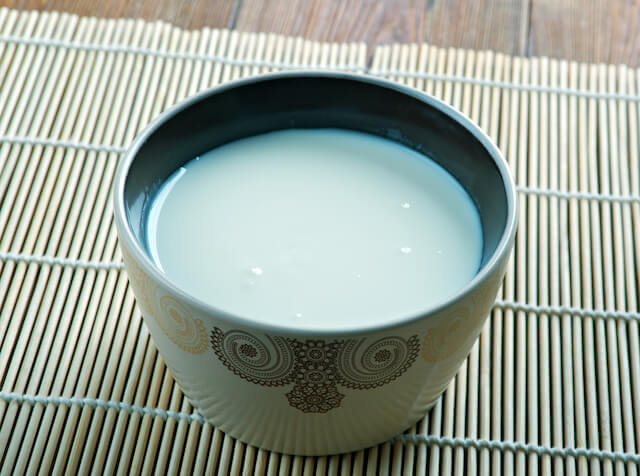
We started with a few tablespoons and worked our way up. You cannot ever have “too much,” and it can become a complete dairy replacement. However we use it like a supplement and drink about 1/2 cup a day. Typically dairy is just not a part of our household, and we have no need for it. We are healthier than ever from the choices we have made to move farther down the natural path in all areas of our life and home.

I recommend purchasing from Colorado Camel Milk. They are a family-owned camel milk dairy committed to organic and non-GMO practices. Use the code speakup to receive 10% off your order!

Tried it?

Have you tried camel milk? Comment and share your experience or testimony below!

References for further research about camel milk.


Jodie Meschuk is a warrior mom to Lincoln, Marshall, and Adeline and is a self-proclaimed modern day hippie who thinks designer fashion and camels are perfect partners. She is an advocate for autism recovery and a fighter for natural health empowerment.

Check out Jodie’s book, Speak Up Buttercup, for the whole story of how she brought her son back from autism.

Go find her out on Instagram @jodiemeschuk or Facebook: Jodie Meschuk.


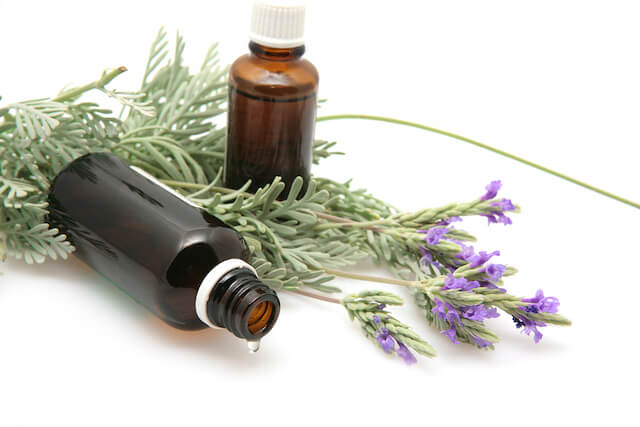
Want more solutions for improving immunity? Check out this post about Essential Oils for Gut Health.

Type IV Allergic Reactions

More than 50 million Americans suffer from allergies each year, and allergy-related illness is the 6th leading cause of chronic illness in the U.S. The causes of allergies are as varied as the resulting symptoms. There are four types of allergic, or hypersensitivity, reactions. Check out this post to learn about Type I Hypersensitivities. Here we will delve into the mechanism and types of Type IV reactions.

Type IV Hypersensitivity Reactions Defined

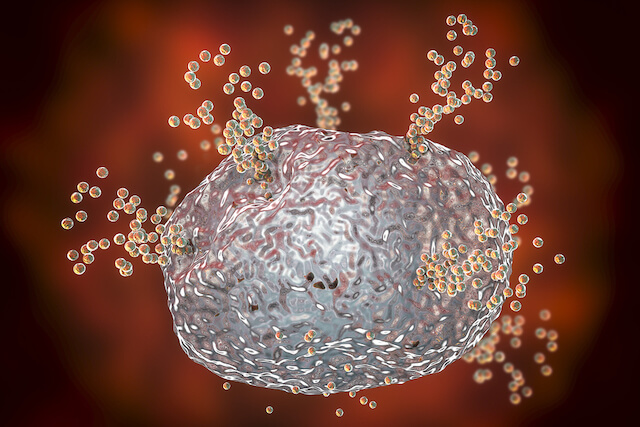
Type IV reactions are delayed hypersensitivity reactions where there is no reaction to the first exposure to a substance, but subsequent exposures to the substance elicit a response. These include contact dermatitis in response to metals, poison ivy, cosmetics, or rubber gloves, as well as adverse drug reactions, multiple sclerosis, and type 1 diabetes.

Type IV delayed hypersensitivity reactions occur in two phases:

  • Induction Phase: Upon the first exposure an allergen antigens react with and sensitize T-cells.
  • Elicitation or Challenge Phase: Upon subsequent exposure to the same allergen, antigens contact pre-sensitized T-cells, activate macrophages, and allergic symptoms occur.

While elicitation may happen soon after induction, it may also take years for elicitation to occur.

Haptens

In plants and essential oils, antigens that participate in Type IV reactions are called haptens. From the Greek word meaning ‘to fasten’, Type IV reactions may occur when haptens enter the body through the skin and bind with peptides on specialized immune cells. The hapten-peptide complexes migrate to local lymph nodes, where they sensitize T-cells. Upon subsequent exposure, sensitized T-cells trigger an immune response in the dermis and epidermis, causing an inflammatory response.

Subcategories of Type IV Reactions

There are many different types of Type IV hypersensitivity reactions. These include contact dermatitis, pigmented contact dermatitis, irritant contact dermatitis, photoallergy, and photosensitivity.

Allergic Contact Dermatitis

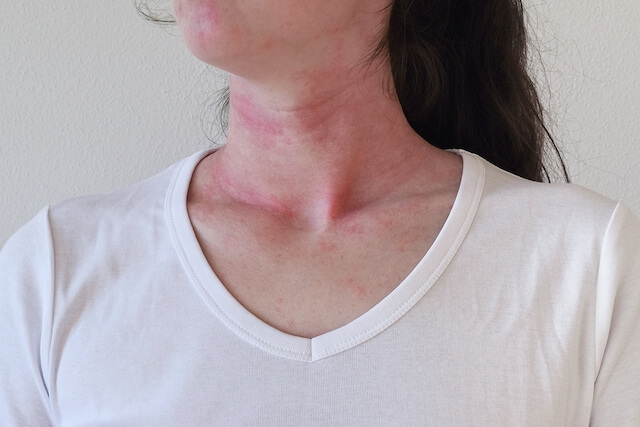
Allergic contact dermatitis is the most common type of delayed hypersensitivity. It is characterized by red rash, itching, dry skin, swelling, burning, or tenderness, and in severe cases, blisters. Those at high risk for allergic contact dermatitis include health care workers, dental employees, metalworkers, house cleaners, cooks, and gardeners, as well as the chronically stressed. People with other allergies at baseline are more likely to suffer from allergic contact dermatitis.

Essential Oils and Allergic Contact Dermatitis

There is no comprehensive list of essential oils that can cause allergic contact dermatitis, nor is there great evidence to differentiate if reactions are truly allergic or merely irritant. Certain essential oils may feel hot or cold on the skin and may cause itching, redness, or irritation. Use caution with clove, lemongrass, cinnamon bark, peppermint, rosemary, oregano, thyme, basil, and cassia. If an essential oil ever causes irritation, add carrier oil.

Most skin reactions to essential oils are localized to the exposed area of skin, and skin reactions to airborne fragrances rarely occur. However, people with skin symptoms are more likely to experience eye and airway symptoms when fragrance is in the air.

The Fragrance Mix

To diagnose allergic contact dermatitis to essential oils, one study used a fragrance mix containing geraniol, cinnamaldehyde, hydroxycitronellal, cinnamyl alcohol, a-amylcinnamaldehyde, isoeugenol, eugenol, and oak moss blended in 87% petrolatum. The mixture was applied to the skin in a patch test. Approximately 11.4% of people tested experienced an allergic reaction to the fragrance mix.

The problem with this study is that most people do not apply multiple isolated chemical constituents to their skin. Instead, we open a bottle of pure essential oil and add a few drops neat or diluted to our skin or place in a diffuser. Rather than using a fragrance mix, a patch test is a better way to test for a sensitivity to specific essential oils.

Pigmented Contact Dermatitis

Pigmented contact dermatitis is similar to allergic contact dermatitis, but skin darkens instead of turning red as melanin rises to the upper dermis. People with darker skin are more likely to have this type of reaction.

Phototoxicity

Phototoxicity is very common with essential oils. Essential oils containing furanocoumarins (FCs) are the cause of phototoxicity reactions.

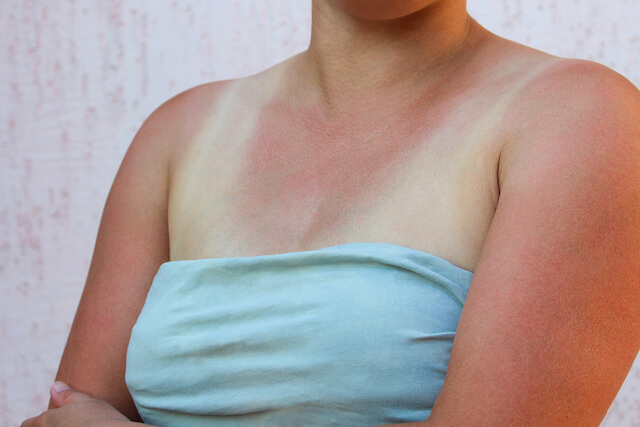
FCs intercalate (squeeze between) DNA base pairs. When exposed to UV light, the FCs form covalent bonds with DNA by crosslinking. This triggers an inflammatory response that causes redness of the skin, sunburn, and in severe cases, blistering. Phototoxicity symptoms may not occur for several days following exposure, and the hyperpigmentation may last for weeks.

Botanicals that can cause phototoxicity are in the Rutaceae and Apiaceae families. Most citrus essential oils cause phototoxicity. However, some citrus essential oils, like lemon leaf, satsuma, tangerine, tangelo, and yuzu, are not phototoxic.

Phototoxicity may occur in people of all skin tones. However, people with lighter skin are more susceptible, and people with albinism are at very high risk. There is no difference in risk of phototoxicity based on eye color, age, sex, or ability to suntan, though a suntan at baseline may confer some protection.

To reduce the risk of phototoxicity, do not apply essential oils high in FCs before going into the sun, and wear protective clothing and sunscreen.

Photoallergy

Photoallergy is a rare reaction where the skin reacts with UV light but does not result in a change in pigmentation. There is one reported case where sandalwood essential oil caused photoallergy, and one case with lavender essential oil. Given the rarity of photoallergy, it is not a concern to essential oil users.


Looking for more educational information about essential oils? Come

Summer-Ready Legs Cream

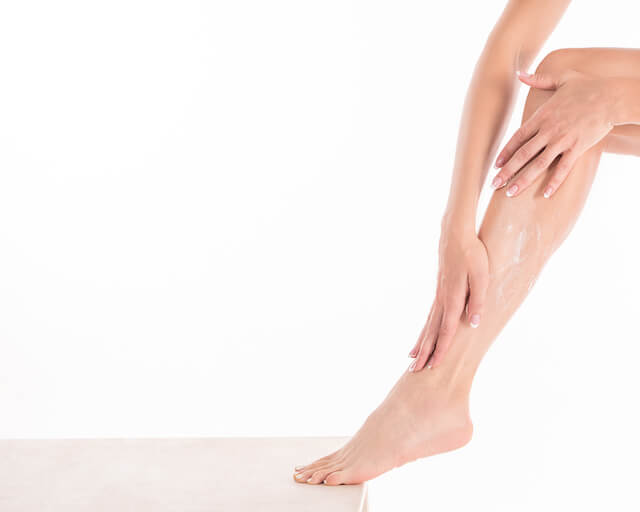
Summer is almost here, and that means shorts, skirts, and swimsuit weather will be here soon. Pamper your legs and get them summer-ready with this nourishing cream!

Shea butter makes a great base for creams because it relieves dry skin, reduces the appearance of cellulite, improves elasticity, and even eases razor burn. Vitamin E is high in antioxidants also helps nourish skin, as well as decreases the appearance of scars, stretch marks, cuts, and other blemishes on legs.

The essential oils in this blend are great for beautifying the skin. While soothing irritated skin, they also promote circulation and reduce the appearance of cellulite. Use this cream daily to tone, tighten and add a healthy glow to your skin!

Summer-Ready Legs Cream Recipe

Ingredients

3/4 cup coconut oil

1/2 cup shea butter

1/2 teaspoon vitamin E oil

8 drops lavender essential oil

8 drops frankincense essential oil

7 drops juniper essential oil

7 drops grapefruit essential oil

6 drops cedarwood essential oil

5 drops carrot seed essential oil

Instructions

  1. Combine coconut oil, shea butter, and vitamin E oil in the bowl of a stand mixer.
  2. Mix on medium-high speed for several minutes, until light and fluffy.
  3. Turn mixer off and add essential oils.
  4. Mix just until essential oils are incorporated.
  5. Transfer cream to a jar with lid.

To use

Apply this cream liberally to clean legs, preferably after a bath or shower. Works great to soothe and restore moisture balance after shaving or sun exposure. Stored in a cool place, this cream will keep for up to 6 months.


Made this recipe? Comment below and share your thoughts about this Summer-Ready Legs Cream!

Don’t forget about your feet! Get them ready for summer with this Summertime Foot Scrub!

Want all the essential oil and natural health and wellness education? Come and

Allergies and Essential Oils: Separating the Fact from the Fiction

Allergic reactions are possible with many natural products, including essential oils. However, true allergies to essential oils are extremely rare. So many blogs and other sources claim the risks of allergic reaction, but in truth, the evidence of this is extremely lacking. Let’s explore how allergic reactions occur and look at some of the research.

The Basics

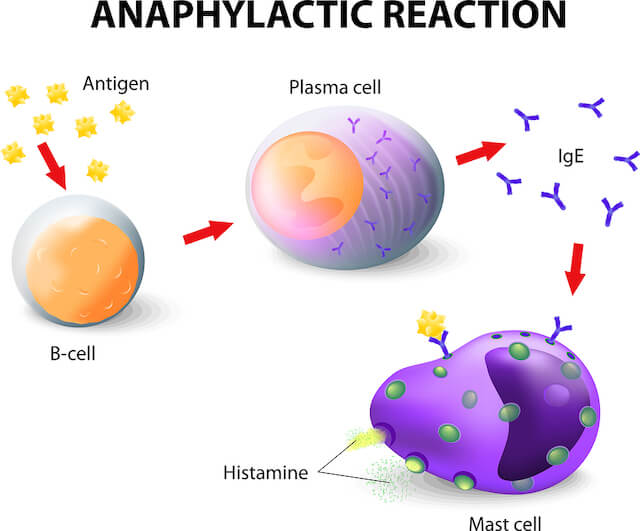
Before we delve into the topic of allergies to essential oils, let’s get some basic information out of the way. An allergy is an abnormal reaction to an ordinarily harmless substance called an allergen. When allergic to something, your body views the allergen as an invader. This triggers an immune response and causes mast cells to release histamine. Histamine is responsible for allergy symptoms, such as itching, sneezing, rashes, watery eyes, shortness of breath, swelling, and anaphylaxis.

Mechanism of Hypersensitivity Reactions

Type I Reactions

Most allergic reactions to fragrances, including essential oils, are Type I Reactions. Also called Immediate Hypersensitivity Reactions, this type of reaction involves B-Cells. B-cells are specialized white blood cells that produce antibodies known as immunoglobulin E (IgE) antibodies. These antibodies attach to mast cells, triggering the release of histamine.

Type I reactions may result from medications, foods, venom, and environmental allergens. Hot and cold essential oil chemical constituents – like cinnamaldehyde, menthol, carvacrol, eugenol, thymol, and others – have potential to cause mild Type I allergic reactions, like itching, redness, or watery eyes.  

Type II, III, and IV Reactions

Other types of allergic reactions involve action of different antibodies in the body (Immunoglobulin M (IgM) and Immunoglobulin G (IgG)). Neither Type II nor Type III allergic reactions have ever resulted from exposure to fragrance materials, including essential oils, so we will not go into detail about these types of reactions here.

Type IV reactions are delayed hypersensitivity reactions where there is no reaction to the first exposure to a substance, but subsequent exposures to the substance elicit a response. This is common with substances like metals, poison ivy, cosmetics, or rubber gloves, as well as adverse drug reactions.

Case Reports of Type I Allergic Reactions

Anaphylaxis is the most severe Type I reaction. Anaphylactic reactions to fragrance molecules are rare. My findings brought up very few documented cases of anaphylaxis resulting from essential oils. One report involved isolated essential oil chemical constituents blended into a perfume during pre-sale testing. A second report was of a nurse assaulted by a patient who sprayed three pumps of an unknown perfume in her face.  

The problem with both of these studies is that they do not involve the use of pure essential oils. Using concentrated, isolated chemical constituents carries a lot more risks than using whole essential oils. And the “unknown perfume” likely contained other ingredients, including alcohol, acetone, ethanol, and a slew of other possibilities.

If you hunt for headlines about allergies to essential oils, you will find them. But it is vital to evaluate the claims before jumping to any conclusions.

Can Essential Oils Actually Reduce Allergic Reactions?

In fact, several studies discuss the potential of certain essential oil constituents to ameliorate allergic response.

In one study, lavender essential oil inhibited IgE response, decreasing the release of histamine in induced allergic reactions. Citronellol, a constituent found in geranium essential oil, also inhibited IgE action and had antioxidant and anti-inflammatory effects. And limonene displayed potent immunomodulatory activity and inhibited mast cell activation. These studies are just a few that demonstrate some essential oils’ ability to modulate immediate-type hypersensitivities and actually reduce the risk of Type I reactions.

Is it Really an Allergy?

In spite of the science, some people still claim that certain (or even all) essential oils cause rash, itching, burning, or respiratory issues. In such cases, it is important to evaluate the true cause of the irritation. Most skin irritations are actually just sensitivities. Proper dilution and patch testing before application is important, especially for people with sensitive skin, as well as children and babies. This is especially important with essential oils that give a cool or warm sensation, including peppermint, clove, lemongrass, cinnamon bark, rosemary, oregano, thyme, basil, and cassia.

A rash can also indicate the presence of toxins in the body. Some essential oil constituents draw toxins out, and this can produce a rash. In such cases, symptoms typically subside within a few days.

If you are sensitive to a particular oil, you may choose to simply stop using it and find an alternative. Or you may dilute the oil and monitor for sensitivity, gradually increasing the concentration. Diffusing is another option if you do not wish to apply certain oils topically.

The idea is to use essential oils with confidence and not fear. If you believe you suffer from allergies to essential oils, it is more likely that you will have some sort of reaction. Often, a reaction is actually a sign of an emotional response or aversion to an aroma. As I always say, start low and go slow when introducing new essential oils.


Looking for cleaning products safe for people with allergies? Check out this post!

If you love learning all the science of essential oils and how they work in our bodies, come , your Essential Oil Encyclopedia!