What are Drug Interactions?

Drug interactions occur when a combination of medications produce a clinically significant change in pharmacologic response that is larger or smaller than the sum of effects when the drugs are administered separately. The variation relates to pharmacokinetics, which is the study of how much and how fast the body absorbs, distributes, metabolizes, and eliminates a foreign substance. 

All manner of foreign substances, including essential oils, interact with the body. This leads to questions about whether people taking certain medications with certain disease states or with a history of disease should avoid using certain essential oils. As always, it is advised to consult a healthcare professional knowledgeable about essential oils before embarking on any new routine.

Drug Metabolizing Enzymes and the Liver

Many drug interactions arise from the liver. This is because the liver is the most active metabolizing organ in the body, equipped with a plethora of drug metabolizing enzymes that break down medications and foreign substances into excretable metabolites. Liver enzymes include cytochromes, CYPs (pronounced ‘sips’), and P450. Furthermore, enzymes may have more specific names (e.g. CYP3A4, 1A2, 2C9, etc.). CYP function varies based on age, race, and individual genetics.

Metabolism

Metabolism consists of three phases: phase 1, 2, and 3. 

Phase 1 Metabolism

Phase 1 metabolism involves basic chemistry: oxidation, reduction, and hydrolysis. There are 2 basic types of reactions in phase 1 metabolism:

  • Enzyme-dependent, such as those occurring in the liver via monooxygenase activity.
  • Byproduct of pH changes, such as those occurring in the stomach.

Byproducts of phase 1 metabolism may not be immediately excretable and may undergo further transformation in phase 2. Additionally, phase 1 metabolism can activate substances (such as prodrugs to active drugs) or toxify substances (when non-toxic starting materials become toxic). 
Phase 2 Metabolism

Phase 2 metabolism uses an enzyme to add a functional group to a molecule. This ensures the group is water soluble and highly excretable. Enzyme-dependent functional groups that serve this function include sulfate, methyl, acetyl, glucuronide, glutathione, and glycine.

During conjugation to one of these groups, most products are rendered water soluble and not available for further use by the body. However, some products may proceed even further to phase 3 reactions. These reactions may take place in the liver, as well as the kidneys, lungs, central nervous system, intestine, prostate, red blood cells, and more. 

Phase 3 Metabolism

Phase 3 takes the conjugation products from phase 2 reactions, removes the added group, and finally, acetylates them to prepare them for excretion. 

Many of these metabolic processes are dependent on enzyme activity, and many foods and medications can alter enzyme function. When an enzyme becomes inhibited, metabolism of any substrate of the enzyme will decrease (meaning the medication or foreign substance will stay in the body longer). If we induce the enzyme, metabolism of the substrate will accelerate (meaning the medication or foreign substance does not stay in the body as long).

Examples of medications that can induce CYP enzymes include rifampin and carbamazepine. Medications that can inhibit include cimetidine, omeprazole, ritonavir, and many more. 

Essential Oil Drug Interactions

Wild mountain sage, brown and yellow camphor, lemongrass, blue chamomile, blue tansy, and yarrow essential oils have been shown in vitro to interact with cytochromes. These essential oils may also interact with medications metabolized by these enzymes. Additional in vitro studies demonstrate hundreds of essential oil constituents that may interact with enzymes. The individual constituents are simply too numerous to name here. 

For information about grapefruit essential oil and enzyme inhibition, check out this post.

Other Drug Interactions
P-Glycoprotein

Efflux pumps, such as P-glycoprotein in the liver, jejunum, colon, pancreas, and kidneys, effectively remove foreign substances from cells. Medications, such as proton pump inhibitors, calcium channel blockers, and certain antidepressants, can inhibit P-glycoprotein, thereby increasing the duration of time a substrate will stay in the body.

The extent to which essential oils can affect drug transport is unclear, however the effect is likely small. 

Plasma-Binding Proteins

Many medications are carried in the blood with plasma-binding proteins (PBPs). Additionally, certain essential oil constituents, such as b-elemene, bergapten, and limonene, have been shown to bind to plasma proteins. This could lead to a potential displacement of medication from PBPs, making it available both for pharmacologic action and metabolism and excretion. 
At the cellular level, foreign substances compete with endogenous substances for binding sites on the cell. The essential oil constituent (E)-anethole is structurally similar to catecholamines, such as dopamine, epinephrine and norepinephrine. Therefore, it may compete with these substances for binding sites on cell surfaces.

Lastly, some foreign substances change the potency of medicines by interacting with their targets. For example, many substances containing high levels of methyl salicylate may potentiate the action of blood thinners because methyl salicylate directly inhibits platelet function and exacerbates blood thinning.

MAO

Monoamine oxidase (MAO) is an enzyme that breaks down neurotransmitters. Certain anti-depressant medicines and anti-Parkinson medicines inhibit this enzyme as a part of their therapeutic action. Because of numerous side effects, these medications are generally not first-line agents.

Nevertheless, essential oils containing eugenol, such as clove, or myristicin, such as nutmeg, may potentially inhibit MAO in rat brains. If you are taking the abovementioned medications, avoiding overuse of essential oils high in eugenol or myristicin may be prudent. 

G6PD

While not a drug interaction, genetic differences in enzyme function, such as glucose-6-phosphate dehydrogenase, may impact the use of essential oils, especially in male children of Chinese, West African, Mediterranean, and Middle Eastern descent.  

There are more than 140 ways genes encode G6PD, and each leads to variations in how the enzyme functions. Drug interactions in patients lacking the G6PD enzyme may result in hemolysis.

Children with G6PD deficiency may be slow to metabolize menthol. Thus, avoiding the overuse of essential oils high in menthol, such as peppermint, may be prudent for people who lack the enzyme. 


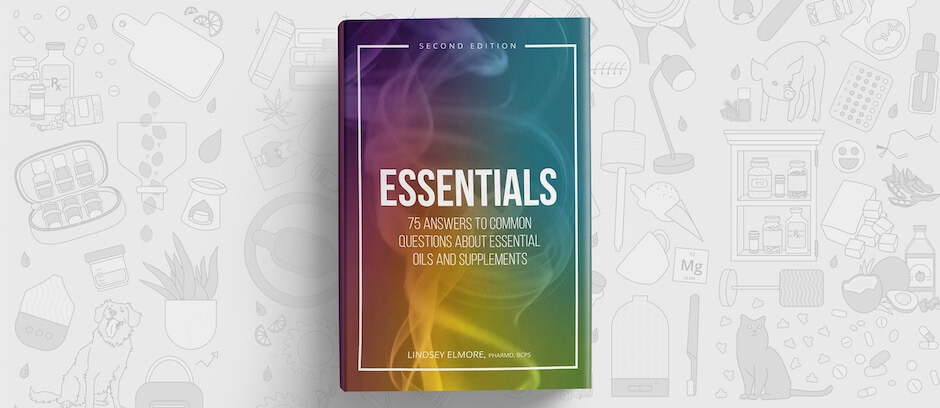
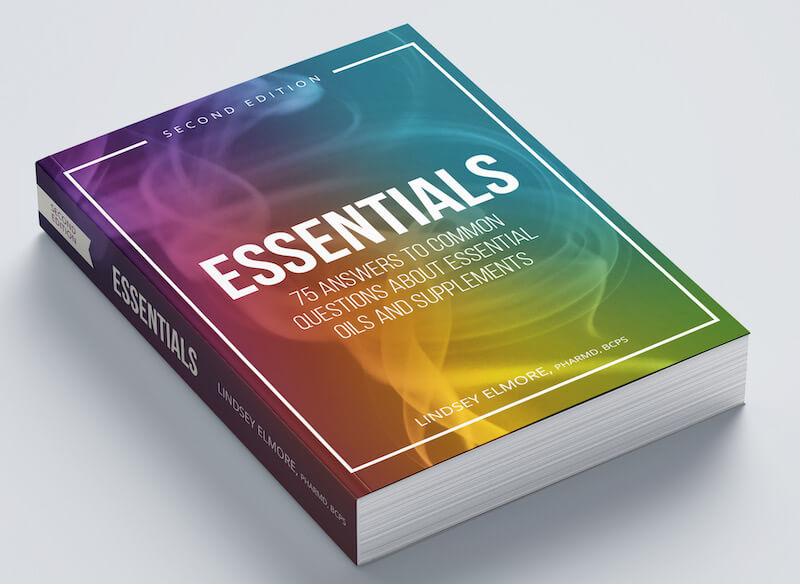
Want to learn more science about specific drug interactions, check out my book Essentials: 75 Answers to Common Questions About Essential Oils and Supplements.

For even more education about natural health and wellness, come !
CBD and Drug Interactions

Cannabidiol (CBD) is the new kombucha. It is the new wonder cure here to help with everything from stress and anxiety to pain and inflammation. Too often, we think that just because a product is natural that it is risk-free. This is simply not true. There is much to consider when using any natural product, especially when combining natural products with medications. When you use any natural product, including CBD, with a medication, there is a risk for drug interactions.

CBD Metabolism

CBD s a chemical compound from the cannabis plant (Cannabis sativa). Cytochromes CYP2C19 and CYP3A4 metabolize CBD. CBD also inhibits not only these enzymes, but CYP2D6 and PgP as well.

Each of these may lead to drug interactions. Before you dive into the rest of this post, be sure that you understand the Basics of Drug Interactions.

Let’s start with Drug Interactions in the Liver

Medications that May Increase the Risk of CBD Toxicity

Medications that inhibit CYP2C19 or CYP3A4 that may increase CBD activity and increase risk of adverse effects of CBD.

Medicines For:

  • Antiplatelet activity (clopidogrel)
  • Arrythmias (amiodarone, diltaizem, dronedarone)
  • Bacterial Infections (clarithromycin, telithromycin)
  • Breast cancer (tamoxifen)
  • Depression and anxiety (fluoxetine, fluvoxamine)
  • Epilepsy (eslicarbazepene)
  • Fungal infections (fluconazole, ketoconazole, miconazole, voriconazole)
  • Hepatitis infection (simeprevir, teleprevir,
  • HIV Infections (amprenavir, atazanavir, darunavir, delavirdine, ritonavir, saquinavir)
  • Heartburn and gastrointestinal reflux (cimetidine, esomeprazole, omeprazole)
  • Sleep Disorders (modafanil)
  • Tuberculosis (isoniazid)

What are the Adverse Effects of CBD to Look Out For?

Generally, CBD is very well tolerated with minimal side effect profile. But CBD does have some adverse effects. Therefore lookout for signs and symptoms like:

  • Somnolence
  • Decrease appetite
  • Diarrhea
  • Malaise
  • Fatigue
  • Rash

That said, really and truly, the risk of drug interactions causing CBD toxicity is very low. CBD is very well-tolerated in most people.

CBD May Also Increase the Risk of Medication Adverse Effects

Above, we describe CBD is metabolism by CYP3A4 and CYP2C19. Therefore, drugs that inhibit these enzymes may increase the risk of adverse effects of CBD.

But, CBD inhibits CYP2C19, CYP3A4, and CYP2D6. Therefore, you have to look out for side effects of medicines. As with any medicine, talk to your doctor or pharmacist about the side effects of your medicines.

CBD inhibits CYP2C19, CYP3A4, and CYP2D6, and may also increase medication activity and the risk of adverse medication effects.

List above, plus medicines for:

  • Blood pressure (carvedilol, metoprolol, timolol)
  • Cough and cold (chlorpheniramine, dextromethorphan)
  • Depression (amitriptyline, fluoxetine, fluvoxamine, nortriptyline, paroxetine, protrityline, venlafaxine)
  • Nausea (dephenhydramine, palanosetron)
  • Pain (codeine, duloxetine, hydrocodone, tramadol)
  • Psychosis (halperidol, risperidone)
  • Sleep (trazodone)

To Make CBD and Drug Interactions Even More Complicated

CYP2D6 has a special property where it also activates certain drugs. These drugs are called pro-drugs, and they must go through the enzyme in order to have any biological activity.

CBD inhibits CYP2D6, meaning it slows down the activation of pro-drugs into their active form. If you are taking one of these medicines, CBD may decrease medication activity and even decrease the effectiveness of the medicine.

Medicines for:

  • Arrhythmias (amiodarone)
  • Depression (bupropion, fluoxetine, paroxetine)
  • Nausea (diphenhydramine)
  • Psychosis (haloperidol, thioridazine)

What about Drug Interactions in the Gut?

PgP Interactions

P-glycoprotein (PgP), is an enzyme that transports foreign molecules out of the blood and into the gut so they can be excreted.

CBD inhibits PgP, which may reduce the excretion of certain medicines. This may increase medicine activity and increase the risk of medicine toxicity.

Medicines for:

  • Gout (colchicine)
  • Heart conditions (dabigatran, digoxin, diltiazem)
  • Pain (morphine)

Well all of this Sounds Scary

There are a lot of unknowns when it comes to the use of CBD. While the information above sounds terrifying, keep in mind that it is almost all theoretical. There is very little reported in the literature about CBD and drug interactions, and by and large CBD is exceedingly safe at reasonable doses.

Bottom Line

This is a very challenging topic. With two-way enzyme inhibition and pro-drug activation, the question “Are there CBD and drug interactions?” is extremely hard to answer.

Often times with natural products, there is no black and white answer to the question of drug interactions. What is known is that you can quickly and easily learn the side effects of your medicines. Simply talk to your pharmacist or health care provider for guidance.


The amount of information about CBD is ever-expanding. To keep up with the most up to date education, . You can start with the CBD Master Course now available!

Differences Between Essentials First and Second Edition

Within 2 years, I published the first two editions of Essentials: Answers to Common Questions About Essential Oils. Many people have reached out asking about the differences between the first and second edition and whether they need to buy both.

When I set out to write the first edition of Essentials, I wanted to create a resource that would answer the most commonly asked questions about essential oils. I wanted to give you a one-stop-shop place to find answers to basic questions about what essential oils are and how to use them, as well as more in-depth answers regarding drug interactions and essential oil chemistry.

Soon after the book was published, you asked for more. The questions kept coming, and they increased in their depth and scope. You wanted to know more of the science of essential oils and see more research. You challenged me to dig deeper to provide meaningful answers yet still teach the basics. It didn’t take long to see the need for a 2nd edition. So you see, the gist of the book is the same, but the content of the second edition has been greatly expanded, revised, and redesigned.

Differences Between Essentials First and Second Edition

Let’s start with the obvious

Okay, first things first. The biggest difference between the two books is in the title. The first edition of Essentials answers 50 common questions; whereas the second edition addresses 75 questions.

Content and Scope

In those additional 25 questions, I expanded the questions/answers to include supplements. Questions like, “Is it possible to overdose on any vitamin or supplement?” and questions about drug interactions, combining supplements, and taking supplements with certain diseases.

In addition to supplements, I stepped a bit out of the box with chapters addressing the use of crystals with essential oils, balancing chakras with essential oils, and using essential oils to impact emotions.

Research

The expansion also included lots and lots more research. I revisited every single one of the original 50 questions and provided you with more studies, more trials, and more reviews. This means the second edition is completely up-to-date with the latest scientific research and each question has been answered thoroughly to the best of my ability. For those of you who like numbers, the first edition has 393 references, while the second edition has 1,414!

Expanded Index and Glossary

There is nothing more frustrating than trying to find what you are looking for and turning up dry. That’s why I expanded both the glossary and index in the Essentials second edition. Don’t know what phytoalexins are? Check the glossary. Looking for specific information about cats and essential oils? Consult the index.

Diagrams and Figures

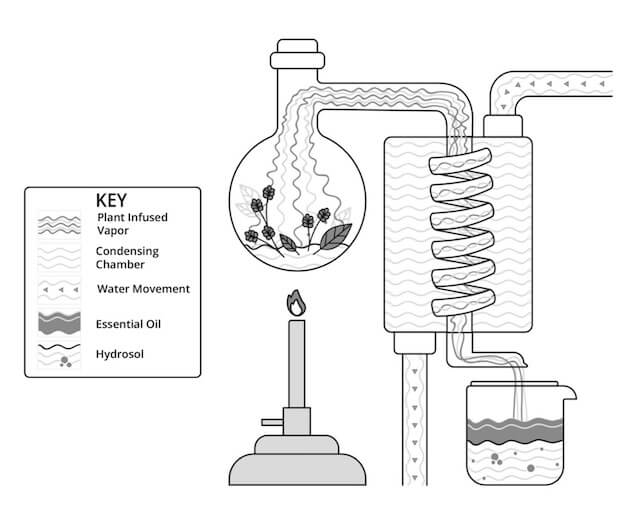
Steam Distillation

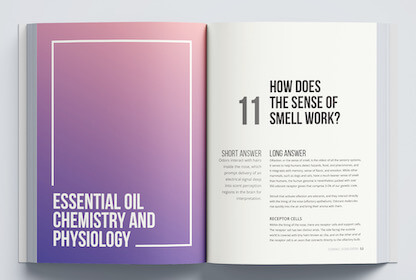
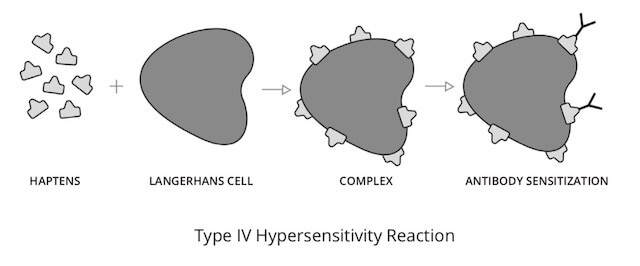
Not only did I aim to make it easier to find what you are looking for, I wanted to give you more quick-reference tools. The new edition is loaded with detailed diagrams and figures to give you a visual reference to some of the wordy descriptions.

For example, you will find pictorial representations of the different distillation methods, as well as lots of biologic figures to show some of the more complex mechanisms throughout the book. Plus, I’ve added more tables for that bottom-line comparison and ease of finding what you are seeking.

Speaking of Bottom Line…

So many of you have reached out to say how much you appreciate the Long Answer / Short Answer layout of the first book. Because sometimes you just want a simple yes or no, while other times you’re looking for all the details. With the second edition, I took that a step further and added a Bottom Line for each answer. If you just want a cut-to-the chase answer, the Bottom Line is just for you.

New Look

Last, but definitely not least, is the new design. I mean, the book is so pretty it just beckons you to pick it up and explore the pages within. I worked with my graphic designer for weeks to come up with a clean, simple, elegant design that isn’t too plain nor too busy. It’s a great book to set on the coffee table to invoke conversations and spark interest. Simple graphics invite the reader to explore without becoming overwhelmed.

And that is the entire point of this book. Whether you have the first edition, the second edition, or both, it is my hope that Essentials: Answers to Common Questions About Essential Oils will guide you through those tough questions and empower you to make informed decisions about using essential oils and supplements with confidence.


If you have one of the Essentials books, comment below and share one thing you learned from it!

Don’t have the books? Come get the latest edition now! While you are there, be sure to sign up for the Essentials Book Club that starts in October!

Warming Muscle Rub

Tell me this happens to you too. . .you finish an epic workout and leave the gym feeling ah-maze-ing. Then you wake up the next morning and feel like you’ve been hit by a truck. Every muscle in your body screams with each move you make. Sound familiar? Rather than suffer your way through every agonizing step of the day, make up a batch of this warming muscle rub to soothe and relax those muscles.

This warming muscle rub goes on smooth and absorbs quickly. The best part is the warming sensation from the essential oils. Your muscles will thank you. Plus, the constituents in the essential oils are great for reducing inflammation so the soreness doesn’t last as long.

Before you get started, a word of caution: This recipe contains a LOT of essential oils. It may seem like a bit of a splurge to use all those oils in one recipe. But be aware that the oils are concentrated for maximum warming and soothing effects. So a little bit goes a long way, which means this rub will last you a long time. Try it and see for yourself.

Warming Muscle Rub

Ingredients

1/4 cup coconut oil

1/4 cup shea butter

2 tablespoons beeswax pellets or carnauba wax pellets

20 drops ocotea essential oil

15 drops eucalyptus essential oil

10 drops peppermint essential oil

10 drops clove essential oil

6 drops lemongrass essential oil

5 drops rosemary essential oil

4 oz. mason jar

Instructions

  1. Combine coconut oil, shea butter, and beeswax in mason jar. These jars are perfectly sized and even come with labels for all of your DIYs!
  2. Create a double boiler by pouring a few inches of water in a small saucepan, and carefully set the jar of ingredients in the water.
  3. Next, gently heat the pan over medium-low heat.
  4. Once the mixture is completely melted, remove from heat. (Be careful, the glass will be very HOT!)
  5. Finally, add essential oils and gently swirl to incorporate.
  6. Allow to cool completely and solidify before using.

To Use

Apply a small amount of the salve to sore muscles and gently massage. Be sure to wash your hands thoroughly and avoid getting on the face or near the eyes. Because of the concentration of essential oils, test a small area with a tiny amount on children or when using on sensitive skin.


Want more ideas for restoring your muscles after a work out? Try this After Workout Balm!

If you are looking for ALL the essential oil education, you’ve come to the right place! Come !