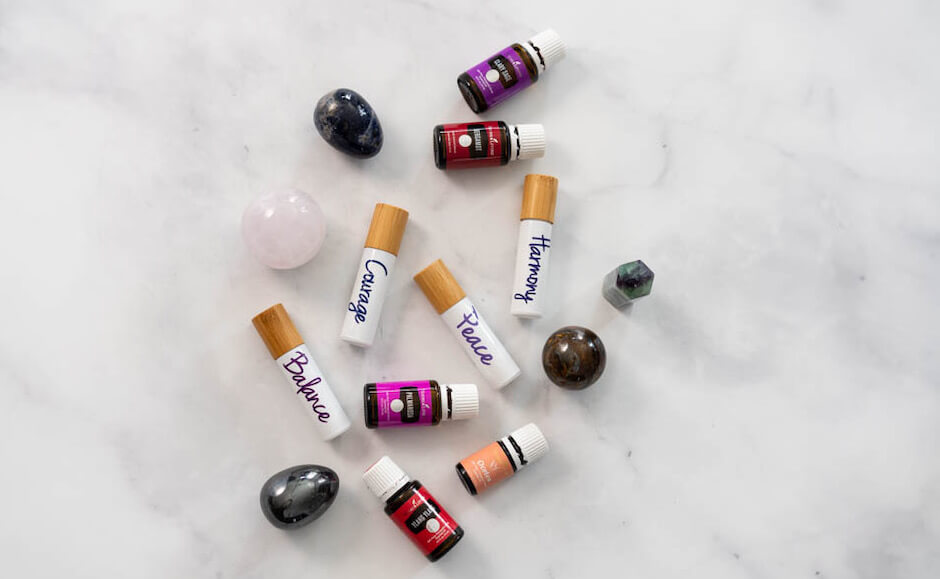
It’s the time of year when kids are heading back to school. New routines and re-establishing good habits can be a struggle for students as well as parents, especially if you are juggling work, kids, and family. These 4 back to school essential oil blends will give you the tools to bring some calm and help you relax during the transition.
Using Crystals in Your Blends
Each of these recipes has some suggested crystals to pair with the blend. While these are not necessary, they do enhance the effects of the essential oils. You do not have to use the stones recommended for each blend; feel free to exchange them if there is one that appeals to you. You can also simply wear or carry these stones with you if you don’t have small pieces to place in the roller bottles. To purchase crystals, check out my crystal shop!
General Instructions
For each blend, add the essential oils listed to a 10 mL roller bottle. (I love the bottles from Whimsy and Wellness!) Then add crystals, if using. Top off with a neutral carrier oil of your choice. Try fractionated coconut oil or sweet almond oil. Affix the roller top, and you are ready to roll!
Back to School Essential Oil Blends
Balance
This blend will be a favorite among busy moms who need a little help staying balanced as they juggle all the demands of the back to school season. It’s also great for adolescent students who need a little extra balance.
Tiger’s eye helps promote clarity of thought and intentions. It helps the wearer welcome change, encourages creativity, and improves feelings of self-worth.
This is a great blend to apply as you send your children off for the day. Give them a little extra help to combat the jitters and worries they face during the busy school day.
Sodalite encourages harmony and rational thinking. It also calms the mind and allows new information to be received. Fluorite is an excellent learning aid and helps the mind stay organized, even among chaotic situations. It shields negative energy and even protects from computer and electromagnetic stress.
Rosemary essential oil comes from the Rosmarinus officinalis plant. For centuries, people have used this evergreen shrub in ceremonies, such as weddings and funerals, as well as for its medicinal properties. The herbaceous, robust aroma of rosemary is a favorite diffused by itself and also combines well with many other essential oils. Check out these 10 ways to use rosemary essential oil.
Beauty and Hygiene
Great for Hair and Scalp Health
One of the best-known uses for rosemary is in applications for the hair and scalp. Rosemary helps to balance sebum, improves the health of hair follicles, encourages thicker hair, and even adds shine and manageability. Try some of my favorite tried-and-true recipes using rosemary essential oil for hair:
Rosemary essential oil is great for toning and improving the appearance of skin. It smooths bumpy areas and reduces the appearance of cellulite.
Oil Control
Many people love using rosemary on their faces because it helps control excess oil without drying the skin. Additionally, it cleanses and helps reduce the appearance of the pores of the face.
Reduces Puffiness
Applied topically, rosemary essential oil improves overall circulation and reduces inflammation. Apply it to red, puffy areas or mix it in with a facial toner or moisturizer. Although rosemary is generally mild, avoid close contact with the eyes.
Health
Improves Digestion
Rosemary may ease minor digestive complaints by inhibiting certain digestive enzymes. Try using rosemary topically for digestive issues, or add a few drops of dietary rosemary essential oil to a gelatin capsule and swallow.
Relieves Muscle Spasms
Certain constituents in rosemary essential oil have antispasmodic properties and can ease cramps and spasms. Next time you have a Charlie horse in your calf, try a gentle massage with some rosemary essential oil.
Boosts Male Virility
Rosmarinic acid is a mild stimulant found in rosemary essential oil. Studies show that when healthy men use this compound, it increases the speed of their “swimmers”.
Energizes and Opens the Airways
The bright, fresh scent of rosemary is great for increasing energy and supporting the respiratory system. Try this recipe for an invigorating shower to start your day.
Combine epsom salt, baking soda, and rosemary essential oil in a bowl.
Add 1 tablespoon water and stir well. Continue adding small amounts of water until mixture forms a thick paste. It will still be slightly crumbly but should hold a shape when squeezed together.
Once the mixture is a thick paste, transfer to molds or an ice cube tray. Be sure to pack the mixture into each compartment, and then smooth and flatten with the back of a spoon.
Place in a cool, dry place for about 24 hours or until melts are dry and set.
Simply place a shower melt on the floor of your shower away from the direct spray of the shower head. If you used an ice cube tray or smaller molds for your melts, you may need to use two. The water and steam will break down the melts for an aromatic experience.
Emotional
Calming
Inhaling rosemary essential has been shown to decrease levels of cortisol. Adding it to a diffuser or wearing topically may help combat occasional stress. Check out this post for a DIY blend with rosemary essential oil to enhance courage!
Improves Concentration & Memory
Just as rosemary helps to energize the body, it also stimulates the mind. Studies show that inhaling rosemary essential oil actually promotes cognitive performance and combats mental fatigue. Even as far back as ancient Greece, students used sprigs of rosemary to help with passing exams.
The questions about CBD continue. This natural drug is becoming increasingly popular as a cure-all, so people want to know the risks and benefits before adding it to their regimen. In this article, we will address the use of CBD for special populations, such as during pregnancy, while nursing, in children, and in animals.
The Endocannabinoid System (ECS)
Before we get into the research, it is important that you understand the way CBD affects your brain. Check out this post to review the mechanism by which cannabinoids interact with the ECS. You will also get an overview of the differences between tetrahydrocannabinol (THC) and cannabidiol (CBD).
While pouring over research, the disappointing fact is that studies involving CBD are lacking. Most studies involving cannabinoids are specific to THC. Because these compounds are similar, some of the data for THC can be extrapolated to include CBD. But be aware that we are drawing a conclusion here, and it may not be 100% reliable.
Although we don’t have a ton of data specific to CBD with special populations, like pregnant or nursing mothers, and children or pets, we can examine ECS development in these populations.
The ECS and Pre-natal Development
The ECS plays an important role in the earliest stages of embryonic implantation and development and throughout pre- and postnatal development and survival. This system directly impacts prenatal neural development. Research from voluntary aborted fetuses showed the development of CB1 receptors first detected at week 14 of gestation in the human embryo. This is compelling evidence of the involvement of the ECS in the maturation of the nervous system.
We know that cannabinoids affect the ECS. We know that human embryos have an active and essential ECS. Unfortunately, research about how cannabis affects the embryonic ECS does not exist. Some people contend that CBD actually helps with neurogenesis, the development of healthy brain cells. Others feel that the interference could be detrimental.
The ECS in Infants and Children
Developmental observations suggest that infants’ CB1 receptors develop gradually after birth. Because of immature CB1 receptors, infants are not as sensitive to the psychoactive effects of cannabinoids. Therefore, scientists propose that children may respond positively to medicinal applications of cannabinoids without undesirable effects. Excellent clinical results have previously been reported in pediatric oncology and in case studies of children with neurological disease or brain trauma.
The question of when the ECS reaches maturity remains unanswered. In my searches, I was unable to find any scientific study detailing this development past the early infant stages.
The ECS in Dogs
The vast majority of research about the ECS in pets is specific to dogs. For this reason, if you are considering giving CBD to your cat or other pets, use extreme caution. I found only one study regarding a cat who exhibited symptoms of intoxication after exposure to marijuana.
According to researchers, dogs have more cannabinoid receptors in the brain than humans. Therefore, they may be more susceptible to cannabinoids such as CBD. Many veterinary scientists claim that THC is toxic to dogs. This is also evidenced by an increase in toxicosis in dogs living in states with legalized marijuana.
The consensus on dogs seems to be that CBD is okay and even beneficial, but THC is very dangerous.
Numerous studies show that cannabinoids cross the placental barrier. One study, in particular, evaluated the increased permeability of the placenta following the use of cannabidoil. It concluded that marijuana consumption enhances placental barrier permeability to xenobiotics and could endanger the developing fetus. Whether or not the use of CBD is safe for a developing fetus, this study raises the question about whether CBD makes the fetus more susceptible to the effects of other drugs and environmental toxins.
So we know that CBD crosses the placental barrier, but what are the effects on the developing fetus?
Prevention of Pre-Term Labor
One study tested the efficacy of CBD to inhibit oxytocin-induced myometrial contractions. In this in vitro study, CBD relaxed uterine contractions. Researchers propose that CBD could be a viable method of preventing pre-term labor in high-risk mothers. However, keep in mind that the study involved uterine tissue in vitro.
Low Birth Weight
Maternal cannabis use during pregnancy is associated with growth restriction in mid and late pregnancy and with lower birth weight. This growth reduction was most pronounced for fetuses exposed to continued maternal cannabis use during pregnancy.
Heart Defects
A pool study from 1968 – 1980 evaluated maternal behavior and heart defects in infants. It concluded a two‐fold increase in risk of heart defects with maternal cannabis use. This risk increased with regular (three or more days per week) cannabis use. The validity of this study is questionable because it is so outdated. Additionally, no details are provided about the method of exposure. It is likely that the mothers in this study were smoking marijuana, of which the quality and source are unknown and which may or may not have been contaminated by other substances.
Cannabis in Breastfeeding
Just as cannabis crosses the placental barrier, it also easily passes into breastmilk. The studies examined involve regular use of marijuana by nursing mothers. How this data relates to the use of CBD in topical or oral formulations is not fully understood.
Decreased Body Weight
One study involving mice resulted in lower body weights of mice of mothers who received a cannabis mixture that included THC, CBD, and other cannabinoids. The study also noted “impairment of maternal behavior”. The question this raises is whether the lower weight resulted from drug intake with mother’s milk, from decreased lactation of drugged mothers, or from a combination of both.
Decreased Motor Ability
A study involving 136 breastfed infants investigated the relationship between infant exposure to marijuana via the mother’s milk and motor and mental development at one year of age. Marijuana exposure via the mother’s milk during the first month postpartum correlated with a decrease in infant motor development at one year of age. Researchers go on to say that this decrease is a result of marijuana inhibiting the quantity and reducing the quality of breast milk.
The Bottom Line for Pregnant or Breastfeeding Moms
All of this information leaves concerned mothers-to-be in a difficult position. While the most sound advice is always to discuss your options with your obstetrician or health care provider, you will likely find yourself immediately shut down depending on your doctor’s personal opinions. Whatever you decide, do your research: Evaluate the research that exists, talk to other moms, and make sure you are confident with your decision before you proceed.
Cannabis in Children
Go looking for research about the safety of CBD in children, and you will find instead a slew of articles about its benefits. In my searches, I found no conclusive evidence of dangers of CBD for children, with the exception of case studies where children accidentally ingested high doses of marijuana, THC gummies, or other forms of cannabis not intended for them. Here is a brief overview of some of the research regarding the benefits of cannabis for children.
Reduction of Seizures
For centuries, cannabis has been used to treat seizures. These studies compellingly demonstrate that cannabinoids such as CBD can be used to reduce seizures effectively, particularly in patients with treatment-resistant epilepsy.
In one study of 19 children between the ages of 2-16, “sixteen (84%) of the 19 parents reported a reduction in their child’s seizure frequency. Two parents reported that their child became seizure-free after more than 4 months of cannabidiol-enriched cannabis use. Of the remaining 14 parents reporting a change in seizure frequency, 8 reported a greater than 80% reduction in seizure frequency, three reported a greater than 50% seizure frequency reduction and three reported a greater than 25% seizure frequency reduction. Three parents reported no change.”
Improvement of Autism Symptoms
The use of cannabis in autistic children may help reduce aggression, hyperactivity, anxiety, and other related behavioral problems. Unlike most studies cited in this article, this one actually involves the use of CBD oil, not marijuana or other THC-containing preparations.
Relief from Insomnia and Anxiety
A case study looked at a single 10-year-old girl with behaviors related to a diagnosis of post traumatic stress disorder (PTSD) secondary to sexual abuse. Her chief issues included anxiety, insomnia, outbursts at school, suicidal ideation, and self-destructive behaviors. The main finding from this case study is that CBD oil can reduce anxiety and insomnia secondary to PTSD.
The Bottom Line for Cannabis Use in Children
Despite lacking data regarding the safety of CBD in children, plenty of studies point to the benefits of CBD. Not to sound like a broken record, but the best advice is to speak to a trusted pediatrician or healthcare professional, do your research, talk to other parents, and make an informed decision. If you decide to try CBD with your child, start low and go slow. Monitor his/her reactions and adjust the dose slowly as needed.
Cannabis Use in Pets
Many websites claim the numerous benefits of CBD for dogs and other animals. Unfortunately, not much research backing this data is available. A survey of veterinarians revealed that more and more recent veterinary graduates are recommending CBD to their patients.
Summing it Up
The mantra of this article has been “do your research, ask professionals and others whom you trust, make an informed choice, and start low and go slow.” Truly, that is the best advice regarding the use of any natural product, but especially one with so much controversy and lack of data. CBD holds so much promise for many diseases and conditions, but using CBD in special populations requires more caution.
The most important thing is to trust your instinct and if you feel at all uncomfortable with a natural therapy, just don’t do it.
I love a fluffy, luxurious shaving cream. But I say no to the harsh chemicals and fragrances in commercial shaving cream. Are you looking for a natural alternative that will leave your legs moisturized, nourished, and silky smooth? Try this all-natural homemade shaving cream!
About the Ingredients
Coconut oil acts as an emollient, which traps moisture in the skin to help keep it moist and protected. Other benefits include the antimicrobial effects of coconut oil.
Shea butter relieves dry skin, reduces the appearance of cellulite, improves elasticity, and even eases razor burn.
Olive oil contains essential fatty acids that are great for moisturizing and nourishing skin. Plus, they make this shaving cream extra smooth to help your razor glide right across you skin.
Vitamin E oil is high in antioxidants and also helps nourish skin, as well as decreases the appearance of scars, stretch marks, cuts, and other blemishes on legs.
Liquid castile soap is made from plant oils, and is safe and gentle for even the most sensitive skin types. It’s the ingredient that helps this shaving cream become fluffy and light.
Essential oils add a lovely fragrance to this recipe. Plus, they nourish and protect the skin. Tea tree is especially helpful if you are prone to blemishes or razor burn. You can omit the tea tree if you are not.
In a small saucepan, melt coconut oil and shea butter over the low heat.
Add olive oil, vitamin E oil, and castile soap and stir to combine. Remove from heat and add essential oils.
Transfer mixture to a bowl and place in the refrigerator until completely solid; about an hour.
Remove mixture from the refrigerator. Using a hand mixer or stand mixer, whip the mixture for about 3-4 minutes, or until very light and fluffy. Scrape down the sides of the bowl as needed.
We use cookies on our website to give you the most relevant experience by remembering your preferences and repeat visits. By clicking “Accept”, you consent to the use of ALL the cookies.
This website uses cookies to improve your navigation experience. Certain cookies categorized as necessary are stored on your browser as they are essential for the working of basic functionalities of the website. We also use third-party cookies that help us analyze and understand how you use this website. These cookies will be stored in your browser only with your consent. You also have the option to opt-out of these cookies. But opting out of some of these cookies may have an effect on your browsing experience.
Necessary cookies are absolutely essential for the website to function properly. This category only includes cookies that ensure basic functionalities and security features of the website. These cookies do not store any personal information.
Any cookies that may not be particularly necessary for the website to function and are used specifically to collect user personal data via analytics, ads, other embedded contents are termed as non-necessary cookies. It is mandatory to procure user consent prior to running these cookies on your website.
Gut Health Impacts Your Overall Health In So Many Ways.
If you experience any of these conditions, it may be time for you to take a closer look at the health of your gut and microbiome:
Acne
Anxiety
Autoimmune Conditions
Brain Fog
Fatigue
Joint & Muscle Pain
Chronic Headaches & Migraines
This handout breaks down the 5 R's of Healing Leaky Gut to walk you through 5 steps to getting your gut health under control to experience better overall health.