
The Best Cleaning Products for People with Allergies

For people with allergies, cleaning house can cause wheezing, skin irritation, itchy eyes, and other discomforts. So many products contain ingredients to which many people are sensitive. Fortunately, harsh chemicals are not necessary to get your home clean. There are many natural products that do the job as well as – or even better than – their chemical-laden counterparts. Here are just a few of my favorite solutions for cleaning without bringing toxic garbage into my home.

To order products, click on the photos or the links in the descriptions!

E-Cloth Home Cleaning Set

Even though is mild and plant-based, some people with very severe allergies may be irritated by the aroma. For those people, I recommend the E-Cloth Home Cleaning Set. These cloths remove 99% of bacteria including E. coli and Listeria from surfaces using only water. The cleaning power comes from 1.6 million microscopic polyester and nylon fibers per square inch. These fibers attract moisture and oil and lift and trap grease, dirt, grime and bacteria with nothing more than water.

There are specialty cloths for many different surfaces: a kitchen cloth with a scrubbing pocket, cloths for glass and polishing, bathrooms, windows, dusting, stainless steel, and ranges and stovetops. Because they reduce the need for paper towels and are guaranteed for over 300 machine washings, they are also good for the environment.

Air Purifier

When we clean, we risk kicking up dust, pollen, animal dander, dust mites, and mold into the air. Equipped with a sealed HEPA filter, the Dyson Pure Hot & Cold captures 99.97% of ultra fine allergens and pollutants. It is certified to capture particles as small as 0.1 micrometers. Plus it cools in the summer, heats in the winter, and the air multiplier projects clean air throughout the home.

If you don’t want cold air projected, it also has a diffused mode that diverts cold air backwards so you don’t feel the chill. This device is smart: it senses and detects airborne allergens, particles, and gases and the Dyson Link app reports air quality in real time. You can also control it with voice and via remote. Compared to other air purifiers, the Dyson is one of the quietest models around, with a Quiet Mark accreditation certifying this fact. It also has a nighttime mode with dimmed lights and reduced sound. I love that it is so much more attractive than other units; it looks like a piece of decor instead of a chunky brick.

DeeBot N79S Robotic Vacuum

Everyone knows that pet dander, mites, and mold are potential allergens, but floors have another big allergen: cockroaches. People with allergies can be exquisitely sensitive to cockroach saliva, skin and droppings, and floors collect a ton of it. Keep the floor clean using the DeeBot Robotic Vacuum Cleaner. Equipped with a high-efficiency filter that helps control cockroach debris, it also removes crumbs and and food debris that may attract cockroaches.
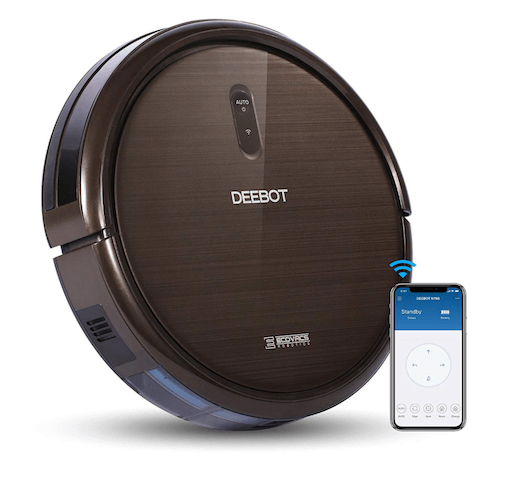
I chose this particular unit because this robotic vacuum significantly reduces the need for regular cleaning. Plus, the air filtration system captures particles and prevents allergenic particles from being projected into the air, it integrates into ECOVAS app, Alexa, and Google Home and allows for easy voice control, and it charges itself without intervention. This smart vacuum is less likely to take a tumble down the stairs because of an advanced laser sensor system with obstacle detection technology that also prevents harm to your furniture.

Hypoallergenic Wool Dryer Balls
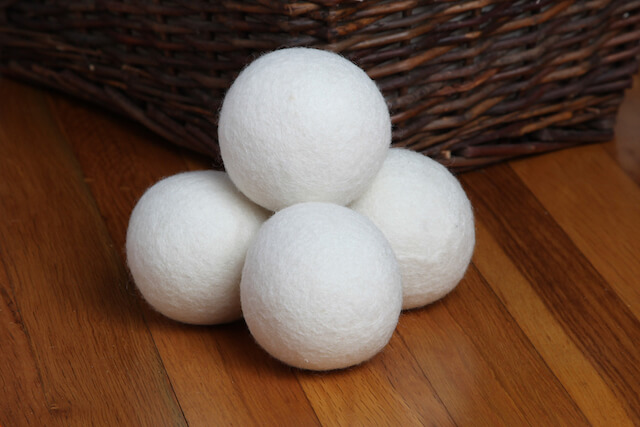
To reduce allergens in the bedroom, it is important to wash bed linens in hot water each week. But so many of the dryer sheets we use contain allergens such as benzyl acetate, dichlorobenzene, or ethyl acetate that can be very irritating to airways, skin and eyes. Dryer balls are chemical free, reusable, and help combat static in clothing and linens. They also improve the efficiency of your dryer by absorbing moisture from clothing. This increases the humidity in the dryer, which reduces the risk of static cling. Additionally, dryer balls help collect pet hair from clothing, reducing allergenic dander.

Some wool dryer balls contain lanolin, an ingredient to which many people are sensitive, and some dryer balls contain cheap fillers. Be sure to purchase 100% wool hypoallergenic dryer balls. If you miss the fragrance of dryer sheets in your laundry, try adding several drops of essential oil to your dryer balls before each use.

Swiffer Sweeper Dry
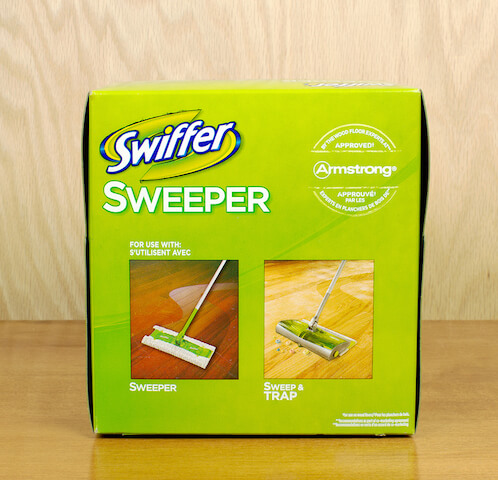
Whereas we don’t want static cling in our clothing, when it comes to chemical-free ways to control dust, pet hair, and allergens, static cling is a fantastic friend. Without the use of chemicals, the Swiffer Sweeper Dry uses static electricity to trap and lock dirt, dust, hair, and allergens, such as cat and dog dander and dust mites. It can replace your broom, which may harbor allergens. Plus, the cloths double as dust cloths for surface cleaning. Bonus! All Swiffer Sweeper Dry products are produced using 100% renewable wind energy.

Disclaimer: be sure you only use the dry sweeper heads because the wet cloth and wet jets contain the potentially allergenic ingredients propylene glycol butyl ether, didecoldimonium chloride, and lauryl glucoside.

Have a favorite natural cleaning solution?

Comment below and share your favorite recipe, product, or solution for cleaning your home without toxic ingredients.


Looking for more natural cleaning solutions? Check out these Spring Cleaning DIYs!

For more natural health and wellness solutions, come and

Taurus: Where the rubber meets the road

The Taurus zodiac sign occurs roughly April 20 – May 20 (it differs slightly from year to year because of the leap year). Occurring when spring makes everything in nature sprout, this sign is fittingly nicknamed the sun sign. And like the sun, people born during this period tend to be creatures of routine. They are characteristically dependable, predictable, and resistant to change. This is the perfect season for all of us to develop and instill new routines, make commitments towards positive change, and take time to slow down as well.

Personality

Perhaps the most reliable sign of the zodiac, Taurus will persistently endure and stick to their choices until they reach a point of personal satisfaction. Taurus are sensible, grounded, practical, and realistic, sometimes to a fault. They find it easy to remain focused on tasks and projects until they are completed. This strong sense of commitment can sometimes come across as stubbornness, and Taurus may even be accused of being uncompromising. However, these characteristics make them excellent employees, friends, and partners.

Taurus are patient and very resistant to change and criticism, and they often bring the voice of reason to arguments. They shy away from emotionally charged situations favoring more practical, tangible solutions. They possess a strong work ethic, love of nature, and deep appreciation for the dependability of seasons. Frequently, Taurus are gardeners, farmers, or builders.

Taurus is a season of slowing down and making plans

For the past four weeks or so, Aries has prevailed, encouraging our creativity and guiding us to break free from the status quo. As we move into the season of Taurus, where the rubber meets the road, we can apply tangible plans to these cultivated ideas and dreams. Taurus’ sign is that of a bull, and it is time to charge forward with all of that pent-up momentum! Not too fast though; patience dominates during this time and begs us to slow our pace and develop a detailed strategy for achieving goals.

This season is also a great time to focus on self-care. As you slow down, you will naturally evaluate what brings you joy and fulfillment. When you do so, don’t shy away from exploring your sensual side as well. As the sign of Venus, “the love planet”, this is the ideal time to mindfully enjoy life’s pleasures. During this stop-and-smell-the-roses season, articulating plans and dreams flows freely.

The Heart Chakra

Taurus is strongly governed by the heart chakra. The primary focus of this chakra is love and appreciation for self and others. As the 4th of seven chakras, the heart is smack in the middle of our energy centers. This unique position makes it the center of integration of earthly matters (from our lower 3 chakras) and higher, spirit-led aspirations (from the upper 3 chakras). The heart chakra connects and integrates these energies harmoniously.

Thus, the heart chakra is all about how we connect and relate to others. When our heart energy is opened and balanced, we have clear vision and can view situations with discernment and compassion. We experience a state of openness and acceptance that brings us in touch with our world and ourselves in profound and fulfilling ways. Through the heart chakra, we also appreciate the simple beauty of life.

Crystals and Stones

Stones that encourage persistence and strength appeal to Taurus people. Green and pink stones appeal to the heart chakra and will help develop this energy.

Essential Oils

Oils that encourage relaxation and sensuality prevail for Taurus. Floral and citrus scents are favorites of this season, and many of these promote relaxation and positivity.

Taurus Essential Oil Blend

Try this blend to encourage mental clarity, relaxed purposefulness, and sensuality.

  • 3 drops ylang ylang
  • 2 drops tangerine
  • 2 drops lavender
  • 1 drop rose or geranium
  • Kyanite, lapis, and/or rose quartz crystals (optional)

Simply add listed oils to a diffuser and enjoy the aroma. Alternatively, you can create a roller bottle. Double the drops of each oil listed above and add to an empty 10 mL roller bottle. Drop in kyanite, lapis, and/or rose quartz crystals (optional), and top off with fractionated coconut oil or other neutral carrier oil.


Want to check out some of the other zodiac signs? Click to learn about Aquarius, Pisces, and Aries.

For even more education about essential oils, natural wellness, chakras, crystals, and more, come and

Essential Oil Play Dough

Play dough is such a classic, simple way to occupy kids (and some adults) in a way that stimulates imagination as well as fine motor skills. Not only that, but playing with play dough is a sensory activity that can calm and soothe cranky, overactive children and relax their minds and bodies. Few activities hold their attention as well as a soft, mushy ball of dough which they can sculpt, squeeze, and smoosh to their heart’s desire! Here are recipes for regular and gluten-free essential oil play dough that incorporate aromatherapy as an added benefit.

Regular Playdough

Ingredients

1 cup flour
1/3 cup salt
2 1/2 teaspoons cream of tartar
1 cup water, add a little more if you like your dough softer
1 tablespoon coconut oil or other vegetable oil
Food coloring (optional)
10 – 20 drops essential oil (use the suggestions below or come up with your own!)

Instructions

  1. In a small saucepan, add flour, salt, and cream of tartar.
  2. Slowly add water and coconut oil, and stir well to combine.
  3. Place pan on stove over low heat and continue stirring constantly. The mixture will begin to thicken.
  4. Before it gets too thick, add food coloring (of desired).
  5. When the dough thickens and begins to pull away from the sides of the pan, use a rubber spatula to remove it from the pan onto a piece of parchment or waxed paper to cool.
  6. When dough is cool enough to handle (after about 20-30 minutes), begin kneading on a lightly floured surface until a smooth, soft ball is formed.
  7. Flatten out your ball of dough and poke a few holes with your finger. Next, add your essential oils to the holes, and continue kneading the dough to completely incorporate the oils. 
  8. Once oils are incorporated, your play dough is ready for playing! 

Store play dough in an airtight container at room temperature and it should last several weeks, depending on how much it is played with!

Gluten-Free Play Dough

Ingredients

1 cup white rice flour
1/2 cup cornstarch
1/2 cup salt
1 tablespoon cream of tartar
1-1/2 teaspoon coconut oil
1 cup hot water
Food coloring (optional) 
10-20 drops essential oil (use the suggestions below or come up with your own!)

Instructions

  1. Combine all dry ingredients together in a medium saucepan.
  2. Slowly add coconut oil and water, and stir well to combine.
  3. Place pan on stove over low heat and continue stirring constantly. The mixture will begin to thicken.
  4. Before it gets too thick, add food coloring (of desired).
  5. When the dough thickens and begins to pull away from the sides of the pan, use a rubber spatula to remove it from the pan onto a piece of parchment or waxed paper to cool.
  6. When dough is cool enough to handle (after about 20-30 minutes), begin kneading on a surface lightly dusted with rice flour until a smooth, soft ball is formed.
  7. Flatten out your ball of dough and poke a few holes with your finger. Next, add your essential oils to the holes, and continue kneading the dough to completely incorporate the oils.
  8. Once oils are incorporated, your play dough is ready for playing!

Store play dough in an airtight container at room temperature and it should last several weeks, depending on how much it is played with!

*This recipe was adapted from the Celiac Foundation

Essential Oils for Play Dough

Calming 

7 drops lavender
4 drops orange
4 drops cedarwood
3 drops frankincense

Take 5

9 drops bergamot
5 drops spearmint
4 drops lavender

Uplifting

5 drops ylang ylang
4 drops bergamot
3 drops frankincense
3 drops lavender

Breath of Fresh Air

5 drops spruce
4 drops cedarwood
4 drops juniper
3 drops fir

Do you love play dough? What are your favorite essential oils to add to your tactile experience? Comment below and share with the community!


Looking for more ways to calm your child? Check out this post about Natural Remedies for ADHD.

For more great ways to use essential oils and loads of educational videos, come and 

Is Eucalyptus Essential Oil Dangerous?

When it comes to safety of eucalyptus essential oil, the constituent that comes under fire is 1,8 – cineole. It exists in varying levels in different species of eucalyptus. Let’s examine the cautions and practical solutions regarding this constituent.

What is 1,8 – cineole?

1,8 – cineole, also know as eucalyptol, is found in many essential oils, including all eucalyptus varieties, marjoram, ravensara, rosemary, bay laurel, myrtle, cardamom, and several others. (See table 62 in The Chemistry of Essential Oils Made Simple.) It is an oxide with a minty, cool flavor and aroma. Eucalyptol is frequently used for respiratory support, as well as in toothpastes, as a flavoring agent, in personal care products, and even as an additive in cigarettes.

Concerns

While many people love using eucalyptus and other oils containing 1,8 – cineole, others have concerns regarding the safety of this constituent.

Seizures

Some studies give reason for concern when using 1,8 – cineole in people with epilepsy or other seizure disorders. The problem with this data is that it relies primarily on studies where the constituent was isolated and administered in large doses. Dose and concentration are so important with the use of any oil, and isolating the constituents can be dangerous. Other compounds in a whole oil provide a “buffering effect”, whereas an isolated compound may be too potent.

Let’s evaluate some individual reports. Of 291 calls to the Poison Control Center regarding contraindications involving eucalyptol, only 2 (0.8%) reported seizures. Most calls were reports of cough and vomiting. One of those with seizures was a 14-month-old boy who “ingested an unknown amount of 20% camphorated oil and spilled a large amount on his clothing.” His symptoms subsided 7 hours after exposure. The other case was a “19-month-old female who ate approximately 50 mL of Vicks VapoRub ointment. One hour later she had a seizure at home and appeared lethargic afterwards.” Within 4 hours after exposure, she was free of symptoms. It’s important to note that these are cases in very small children who ingested a large quantity of eucalyptol.

Seizures resulting from essential oil usage are rare. As you can see, even for people with seizure disorders, it really boils down to the dose and the concentration of 1,8-cineole. Seizures have been induced by eucalyptus essential oil and eucalyptus containing products, BUT only when the dose was extremely high (10 or more milliliters). As always, if you are considering using 10 or more milliliters, do not pass go, do not collect $200, phone a friend, and then use way less oil.

Respiratory distress

1,8-cineole is a TRMP8 agonist. This means it interacts with the body’s cold and menthol receptor to produce a cooling sensation. Similarly to cold air, menthol and eucalyptol may slow respiration due to stimulation of the cold receptor. Quite the opposite, other studies report the anti-inflammatory action of this compound on airways.

Choices, choices

Avoidance

If you or your child suffer from epilepsy, seizures, or respiratory disorders, you may choose to avoid essential oils containing eucalyptol or menthol.

Variety Choice

If you want to be cautious with eucalyptus, you can choose a variety with a lower concentration of 1,8-cineole. Keeping in mind that essential oil constituents vary from batch to batch, here is an estimate of concentrations:

  1. 85-95% – Eucalyptus polybractea
  2. 60-75% – Eucalyptus globulus
  3. 60-75% – Eucalyptus radiata 
  4. 0-1% – Eucalyptus dives

Dilution

Especially for infants and very young children, it is wise to dilute all essential oils and to avoid applying on or around the face or hands. And it is ultra important to always keep your essential oils out of reach of children.

Whether you choose to avoid oils containing 1,8 – cineole or use with caution, it’s important to understand the facts and make a decision with which you are comfortable. Some people choose to avoid eucalyptus if they have epilepsy. Others simply choose a species with less 1,8-cineole. Just don’t overdo it on the dosage, choose a 100% pure essential oil, and start low and go slow.

What is your experience?

I’d love to hear your thoughts about using eucalyptus with children. Comment and share your insight below.


You may want to also check out this post, Eucalyptus and Peppermint Oil in Children.