Add vodka or witch hazel and essential oils to a 4 oz. glass spray bottle and top off with distilled water. Shake gently before spraying. (Avoid wood surfaces.)
Rise and Shine Roller Blend
If the hot summer temps have you pulling the covers over your head, try this blend to get you up and going!
Add essential oils to a 10 mL roller bottle and top off with a neutral carrier oil, such as fractionated coconut oil or sweet almond oil. Drop in carnelian crystals for added energizing benefits. Roll on neck, wrists, or other areas for a boost.
Combine essential oils and aloe vera in a 2 oz. glass spray bottle, and top off with distilled water. Shake gently before misting on body. Avoid spraying around eyes and face.
Want more oils for your summer? Check out this post!
If you love learning about the benefits of essential oils and want to learn more, check out , your Essential Oil Encyclopedia!
This summer, June 21 not only marks the longest day of the year, but also the beginning of the season of Cancer. That means there is a different energy in the air, and this can result in an emotionally-charged month for everyone. Between June 21 and July 22 you may feel more sensitive and experience a heightened sense of self awareness. And if you were born under this sign, now is your time to flourish.
Personality
Those born under the Cancer sign tend to be deeply intuitive and sentimental. They are very emotional, sympathetic, and sensitive, and can be difficult for others to get to know. Because of their emotional awareness, Cancers empathize with others well and care deeply about the people closest to them.
Ruled by the moon, Cancers can be overly sensitive or dramatic and even “crabby” or moody. When a Cancerian feels insecure or wronged, they tend to avoid confrontation and flee the situation instead. While they are quick to help others, they also have a tendency to be self-centered and sink into bouts of self-pity when they don’t feel valued.
As an emotional sign, these people focus much attention on the feelings of themselves and others. They are deeply loyal and caring partners and friends. They seek to know others deeply and are not interested in superficial or casual relationships. Once you’ve broken through their tough exterior, Cancerians will stand by your side and support you almost to a fault.
Relationships take center stage
Don’t be alarmed if you find yourself feeling more emotionally charged during the season of Cancer. You may be more introspective and thoughtful, or you may even feel downright moody. If you tend to be shy, this is a great time to break out of your shell.
Summertime and the season of Cancer are all about having fun and interacting with others. This is a great time to connect with old friends or to pursue new relationships.
Be sure to schedule in some time for rest, too. Long summer days are perfect for relaxing as your imagination and intuition are running high. Cancer season is perfect for centering yourself and taking a bit of time for some personal pampering and self-care.
The Third Eye Chakra
Because of their innate intuitiveness and compassion, it is no surprise that the third eye is the predominant chakra of Cancers. This chakra is responsible for guiding intuition and inner awareness. The energy of this chakra enhances clear thought as well as spiritual contemplation and self reflection.
An imbalance of the third eye may result in feeling stuck or unable to envision a clear path. Feeling disconnected or rejecting things of a spiritual nature can also mean the third eye is out of whack. Conversely, a balanced third eye chakra will result in clear vision and a positive outlook, as well as insight and creativity.
Crystals and Stones
Cancers will benefit most from stones that encourage stability and emotional balance. During this season, certain stones will enhance intuitiveness for Cancers and other signs as well.
Moonstone
Carnelian
Calcite
Rhodonite
Citrine
Ruby
Essential Oils
Cancerians often suffer from digestive complaints, so essential oils that support healthy digestion may offer relief. Additionally, mood supportive oils will tame the frequent emotional bouts that everyone (Cancer or not) may experience during this time. Essential oils that enhance dreaming and vision can also help you capitalize on this time of intuition.
This blend can be made and worn topically or added to a diffuser. Try making an Envision Spray to help encourage intuition and relaxation this season. Use the spray as a personal body mist, or spritz on sheets and pillows before bedtime.
Pets experience fear or anxiety for various reasons. Loud noises, such as fireworks or storms, strange visitors, new experiences, trips to the vet, and injury or illness, are just a few common reasons pets experience stress. Fortunately, there are a number of natural ways to help alleviate your furry family members’ fear. Among these, essential oils can help calm and ease pets’ anxiety and stress.
For the most part, the oils that you use to relax and calm yourself are the same ones you can use with your pets. Understanding the type of fear, anxiety, or phobia your pet is experiencing will help you choose the right oil for the job. Check out this post to learn more about fear in pets.
Citrus oils
Citrus essential oils, like bergamot, orange, tangerine, or lemon are uplifting and can help calm an anxious pet. These may be especially helpful for pets that experience separation anxiety or sadness.
Flower oils
Flower oils are relaxing and can help improve self esteem and confidence. Lavender essential oil is a gentle, go-to oil for relaxing nervous pets. You may also try ylang ylang, melissa, angelica, chamomile, or neroli. Place a few drops on your pet’s bedding or in a nearby diffuser to encourage peaceful rest and reassurance, especially when the animal is frightened by loud noises, such as a storm.
Tree oils
The chemical constituents in tree oils, such as sandalwood, cedarwood, spruce, and frankincense, are perfect for encouraging sleep. Because many of them tend to have milder aromas, even pets who are opposed to most essential oils may tolerate tree oils better.
Root & Seed Oils
Root and seed oils are grounding, promoting security and confidence in pets and humans. Some specific oils to help increase your pet’s courage are valerian and coriander seed. These oils may also help promote rest for an animal who has trouble sleeping.
Other Calming Essential Oils for Pets
Other oils that may help to calm general pet nervousness include patchouli and petitgrain. Hyssop may be particularly effective at helping a pet overcome stressful memories or history of abuse or neglect.
What are your favorite oils to calm your pets?
Comment below with your suggestions!
You may want to try this simple Peaceful Pup Blend to help soothe your four-legged family members!
Concerned about using essential oils with your cat? Check out this post.
For much of America, July 4th includes fireworks as part of the celebration. And for many pet owners, this equates to a stressful evening of fearful, anxious animals. People with otherwise well-behaved dogs often dread this holiday as well as thunderstorms and other fear-evoking occurrences. Understanding the natural fear response in pets can help you find appropriate ways to soothe and calm your pet during times of stress.
Fear, Phobias, and Anxiety
In order to understand and better help your pet, it is important to recognize the difference among fear, phobias, and anxiety.
Fear
Fear is an animal’s natural response to a potential threat. This is an instinctual fight-or-flight response to a perceived or real frightening event or trigger. When an animal becomes frightened by a stimuli, such as a loud firework, the sympathetic nervous system is activated and enters a temporary state of overdrive so they can escape danger. It’s the same biological response they would have in the wild when threatened by a potential predator.
Phobia
When routinely or persistently exposed to a specific fearful situation, an animal may develop a phobia. An animal may exhibit a phobia when it is confronted by, or even just anticipates, a specific trigger. Animals commonly develop phobias to loud noises, but they may develop phobias to unrealistic objects and situations if they experience stress related to them.
Anxiety
When your pet feels their environment is unpredictable, fears and phobias can turn into anxiety. The animal is always anticipating a stressful or scary event, so they are “on edge” much of the time. Animals with anxiety may be jumpy and nervous all of the time and become easily upset by minor changes in routine, noises, and other benign stimuli.
Causes of Fear and Anxiety
Illness, especially when the animal is in pain, or disability, such as deafness or blindness
Scary experiences
Nervous system disorders associated with aging
Deprivation from social experiences during the first several weeks of life
History of abandonment, multiple owners, rehoming, or prior neglect
An overly nervous or anxious owner
When Fear Takes its Toll
Although a fearful or anxious pet may seem like an inconvenience, these behaviors actually affect your furry friend in ways that may be more of a concern. Just as a person with anxiety experiences health effects, long-term stress can be detrimental to your pet’s health.
In fact, a survey of pets with persistent fear and/or phobias showed a markedly shortened life span and increased occurrence of skin disorders. Stressed animals may vomit, have diarrhea, or other digestive upsets. This is because stress has a direct effect on the gastrointestinal tract. Psychological stress can also contribute to weight loss and respiratory issues, according to this study that examined 60 shelter cats.
In addition to the above, the results of long-term stress can include myopathy, fatigue, hypertension, decreased growth rates, and suppressed immune function.
Signs of Fear
Preliminary signs of mild fear in pets include tail-tucking, trembling, whining, restlessness, and hiding. As fears worsen, an animal may become aggressive and have diarrhea or accidents indoors. An anxious animal may experience skin disorders and itching, frequently lick and bite itself, and withdraw from social situations. Anxious dogs tend to bark more often, sometime inexplicably. Animals with separation anxiety often show destructive behavior. Remember, anxious animals are constantly anticipating something bad to happen, so they are on edge all of the time.
Natural Remedies for Animal Fear
How you handle the problem should be specific to the animal, its triggers, and the severity of the issue. If your animal is fearful of fireworks, for example, the approach will differ from an animal who experiences ongoing anxiety.
Provide a safe place
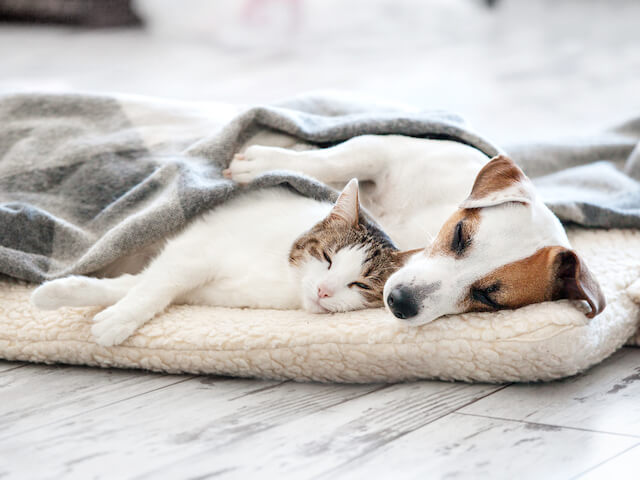
Many animals appreciate a crate, bed, or other area that they know is theirs and where they feel safe. Especially when started close to birth, a special bed or blanket can bring security to a fearful pet. Cats tend to prefer smaller, dark, closed spaces.
Touch
Sometimes your presence and soothing touch is all that is needed to soothe your animal. As you reassure your pet, be sure you are relaxed and light-hearted. If you feel stressed about your animal’s fear, they will certainly pick up on this.Some pets respond well to weighted jacket that provides deep touch.
If your animal is fearful of loud noises, try distracting him or her during thunderstorms. Get out a new toy or ball and play with your animal.
Exercise
Just as for humans, exercise is great medicine for anxious or fearful animals. A physically tired animal is a calmer animal. Prior to those 4th of July fireworks, take your dog on a long walk or spend time in some active play with your cat.
Counter-Conditioning
If your animal is afraid of storms or other loud noises, you may want to try desensitizing them to the phobia. You can play the sounds of fireworks, thunder, or other noises while reassuring your pet with positive experiences like treats or belly rubs.
CBD Oil
Many people are looking to CBD oil to alleviate mild to moderate anxiety and stress. So it is no surprise that veterinarians are catching on as well. CBD may be administered orally or topically to help relieve your furry friend’s stress.
Herbs
Certain calming herbs can help pets just as much as people. Be sure to research specific herbs, as not all natural plants are safe for animals. Some good options include chamomile, valerian, and St. John’s wort. You make these herbs into a tea and pour over your pet’s food.
Essential Oils
When using essential oils with your pets, it is important to keep in mind that their sense of smell is much more sensitive than humans’. Begin with a single drop of essential oil on your pet’s blanket or bedding. You may also diffuse near your animal, but be sure the animal can leave the room as desired. Some people apply essential oils topically to pets. Use caution and start with a very small amount. Strong aromas can actually upset animals, thereby increasing anxiety. Dilute the oils or use blends specifically formulated for animals. Click here to learn about specific essential oils for your pets.
How About You?
Have you discovered a great way to soothe your pet’s anxiety or stress? Comment below and share!
Tuesday, June 24, 2019 I will be hosting a live interactive call to discuss fear in pets. Want to join the call? Come for free!
We use cookies on our website to give you the most relevant experience by remembering your preferences and repeat visits. By clicking “Accept”, you consent to the use of ALL the cookies.
This website uses cookies to improve your navigation experience. Certain cookies categorized as necessary are stored on your browser as they are essential for the working of basic functionalities of the website. We also use third-party cookies that help us analyze and understand how you use this website. These cookies will be stored in your browser only with your consent. You also have the option to opt-out of these cookies. But opting out of some of these cookies may have an effect on your browsing experience.
Necessary cookies are absolutely essential for the website to function properly. This category only includes cookies that ensure basic functionalities and security features of the website. These cookies do not store any personal information.
Any cookies that may not be particularly necessary for the website to function and are used specifically to collect user personal data via analytics, ads, other embedded contents are termed as non-necessary cookies. It is mandatory to procure user consent prior to running these cookies on your website.
Gut Health Impacts Your Overall Health In So Many Ways.
If you experience any of these conditions, it may be time for you to take a closer look at the health of your gut and microbiome:
Acne
Anxiety
Autoimmune Conditions
Brain Fog
Fatigue
Joint & Muscle Pain
Chronic Headaches & Migraines
This handout breaks down the 5 R's of Healing Leaky Gut to walk you through 5 steps to getting your gut health under control to experience better overall health.